
Most meal plans start with a question like “What do we want to eat this week?” That is hard to answer on a Tuesday night when you are tired. Seasonal meal planning for families starts with a different question: “What produce is at its best right now?” Once you have that answer, half the menu is already decided.
This post walks through a simple way to do it. You pick a few fruits and vegetables each month, build a rotating weekly menu around them, and shop with a clear plan. Since it’s October, fall is the worked example.
Why Plan Meals Around the Season
When a fruit or vegetable is in season in your area, there is a lot of it available. Stores tend to price it lower because supply is high, and it often tastes better because it was harvested closer to ripe. A sweet, crisp apple in October needs very little help from a recipe.
Planning this way also changes what you do at the store. Instead of wandering the produce section and hoping something looks good, you walk in knowing the few things you came for. That makes the trip shorter and the cart less random.
Seasonal planning also adds variety without extra effort. Your menu changes four times a year on its own, so the family doesn’t eat the same broccoli-and-chicken rotation from January to December.
How to Find Out What’s Actually in Season Where You Live
“In season” depends on where you live. Pumpkins and apples are fall staples in much of the United States, but a state in a warmer climate may have a different list. A few ways to check:
- Look at the store. Produce that is front and center, stacked high, and marked down is usually in season. Weekly store flyers often lead with it.
- Visit a farmers market. Vendors only sell what is being harvested nearby. Ask them what’s coming next month.
- Search for a seasonal produce chart for your state. Many state agriculture departments and university extension offices publish one.
- Check the label. Produce labeled with a nearby state or region is more likely to be in season than fruit that traveled across the world.
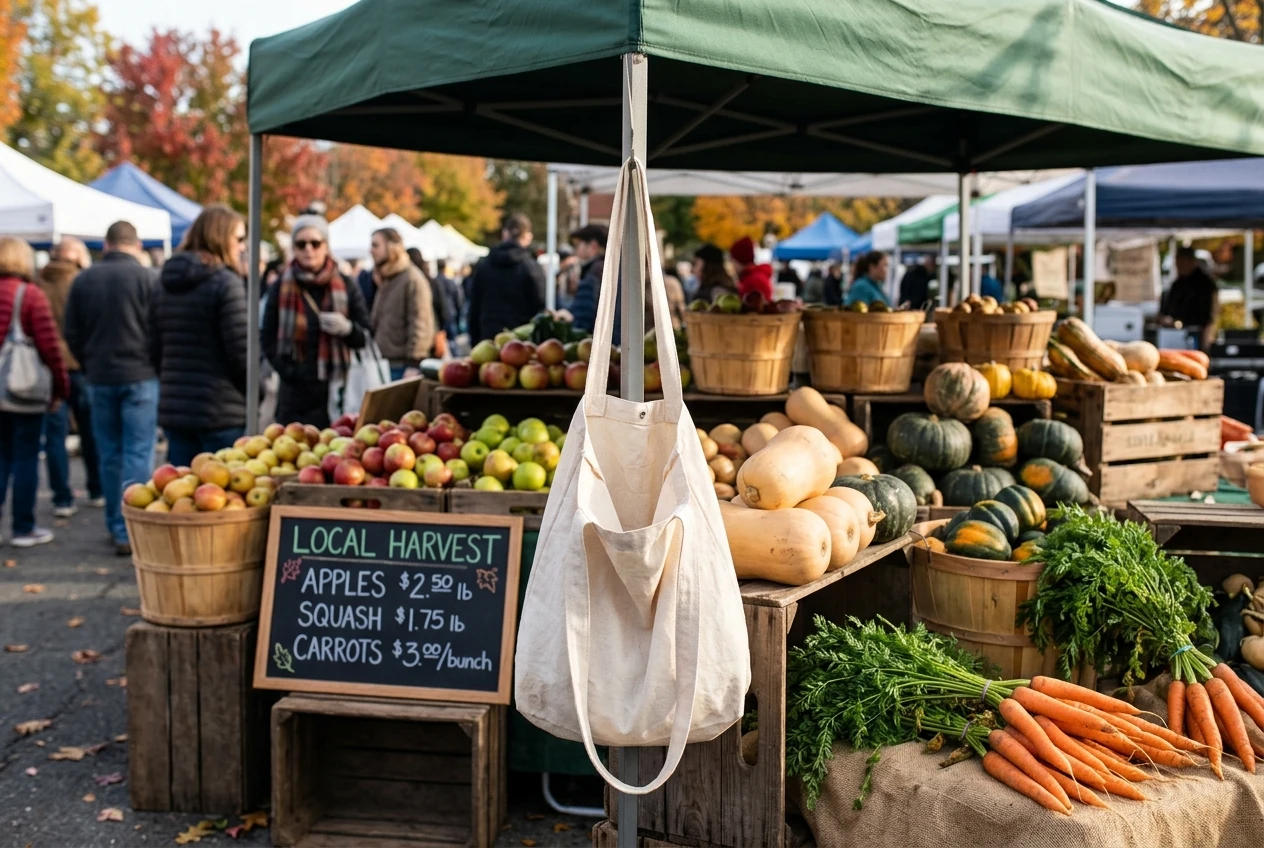
Write down what you find. You only need to do this research once per season, and after a year you will know most of it by heart.
The 5-Item Rule: Choosing Your Produce for the Month
Here is the rule: each month, pick four or five in-season fruits and vegetables.
A short list keeps the plan from becoming one more thing to manage. It also means you will cook the same ingredients several ways in a month, which is easier on your budget.
When you choose your five, use these guidelines:
- Pick at least one fruit and at least two vegetables. That gives you something for snacks, sides, and main dishes.
- Choose things your family already eats. At least two of the five should be foods nobody argues about.
- Add one new food. One new item a month is a low-pressure way to widen what your kids will try.
- Pick items that work in more than one meal. Sweet potatoes can be a side, a taco filling, or a breakfast hash. Those are better choices than something you can only cook one way.
- Check the price. If something is expensive in your store even though it’s in season, swap it for another option.
Fall Example: One Week of Family Dinners Built on Seasonal Produce
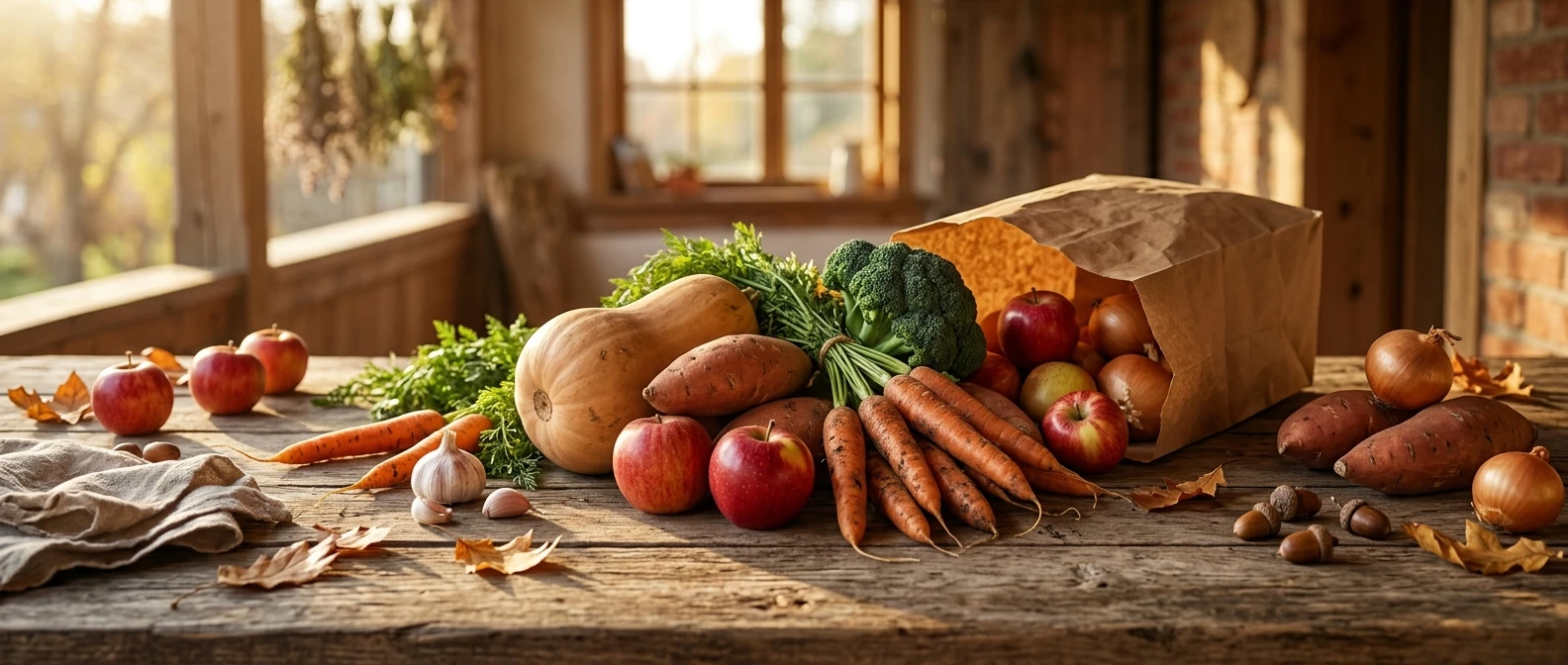
For this fall month, say your five items are apples, butternut squash, sweet potatoes, broccoli, and carrots. In much of the US these are easy to find in October. Here is one week of dinners that uses them:
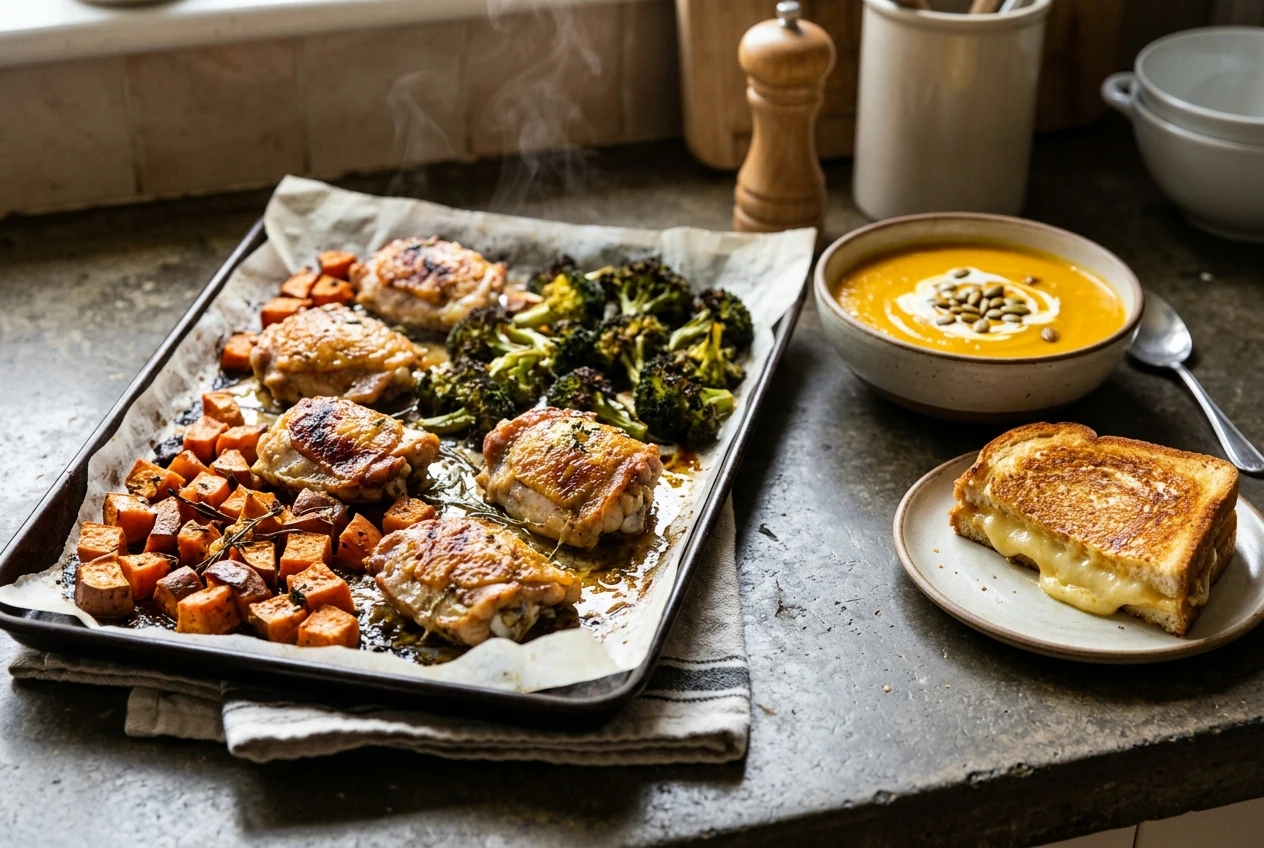
- Monday: Sheet-pan chicken thighs with roasted sweet potatoes and broccoli. One pan, one cleanup.
- Tuesday: Butternut squash soup with grilled cheese sandwiches and apple slices on the side.
- Wednesday: Taco night with roasted sweet potato cubes and black beans. Serve carrot sticks on the side.
- Thursday: Slow cooker chicken with carrots and chopped apples. If you want more ideas for this night, the 25 healthy slow cooker recipes for busy moms post has plenty.
- Friday: Homemade pizza night. Add steamed broccoli as a topping on part of the pizza, and keep one side plain.
- Saturday: Breakfast for dinner with apple oat pancakes and scrambled eggs.
- Sunday: Roast chicken with carrots and roasted butternut squash. Save the extra chicken for the week ahead.
Count the produce: five items cover seven dinners. Nothing on the list needs a special trip to a different store. The broccoli shows up twice, the sweet potatoes twice, and the apples three times, in different forms.
You don’t have to copy this exact week. The point is to see how a short produce list turns into a full menu with little effort.
Buying Smart: What to Buy Fresh, Frozen, or in Bulk
Not everything has to be fresh to count. Here is a simple way to decide:
Buy fresh when the item is at its peak and you will use it within a few days. Broccoli and apples are good examples.
Buy frozen when you want the same vegetable later in the week or later in the month. Frozen vegetables are usually frozen soon after harvest, and they keep for months, so they cut down on waste. Frozen broccoli is handy on a night when the fresh bunch has gone soft.
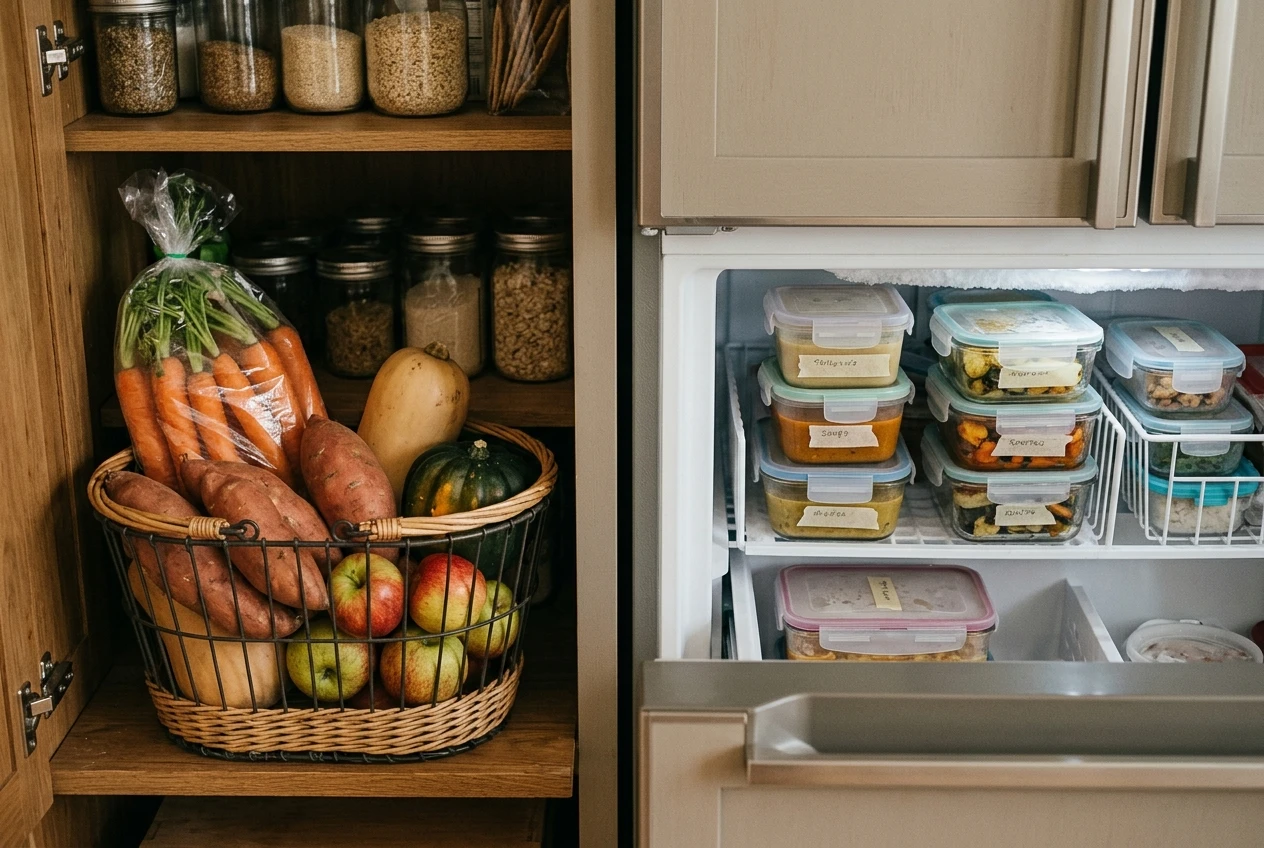
Buy in bulk when the item stores well. Hard produce like winter squash, sweet potatoes, carrots, and apples can last a good while in a cool, dry place or in the fridge. A big bag costs less per pound than single pieces, as long as you will actually use it.
Stock up when you see a seasonal sale on something you know your family eats. Buy extra, then cook and freeze a batch of soup or roasted vegetables. This works best when you have a plan for the extra, so it doesn’t end up in the trash.
When you build your shopping list, group items by where they sit in the store. The guide on how to organize your grocery list by store layout can help you cut down time in the aisles.
Making Seasonal Food Work With Picky Eaters and a Packed Schedule
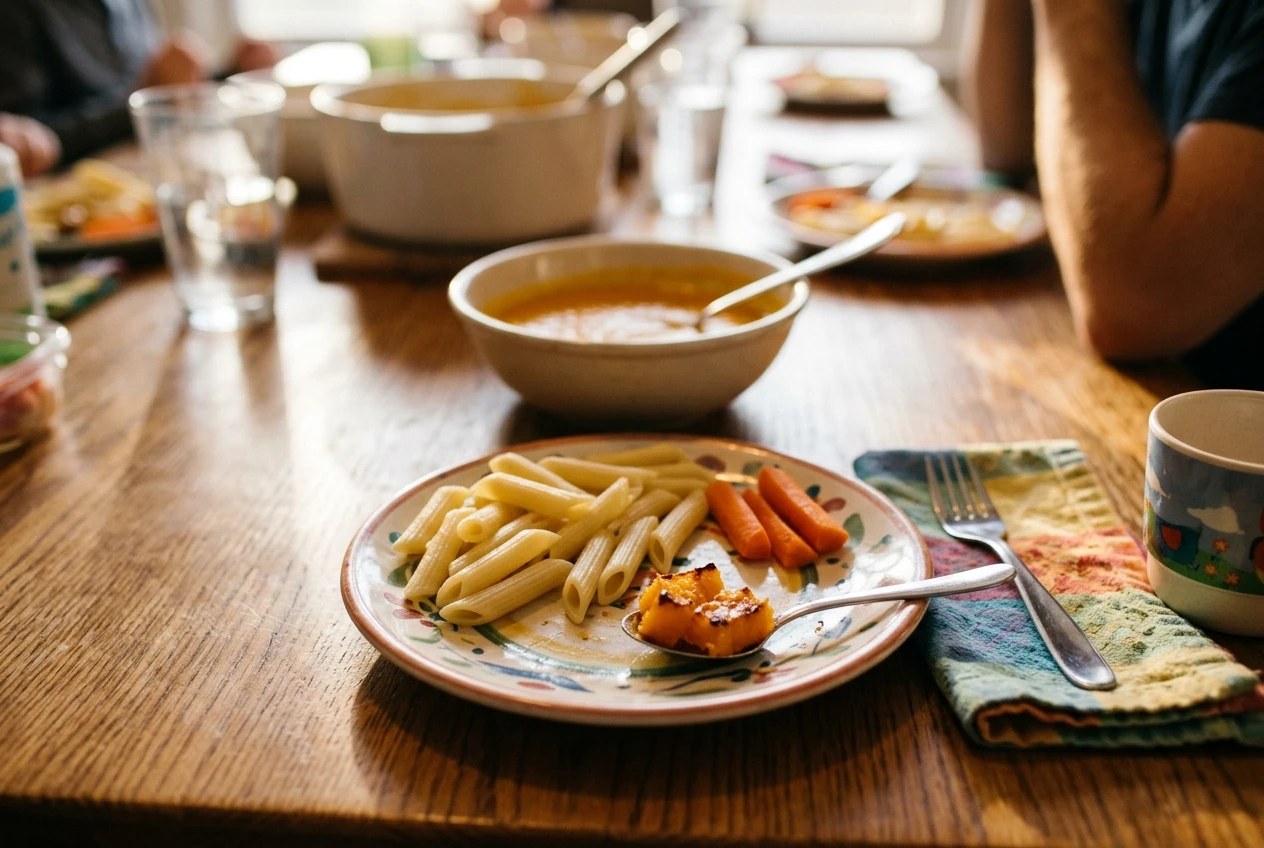
A new vegetable on the table can get a strong reaction. The five-item list helps here because you repeat the same foods in different forms. A kid who won’t touch roasted butternut squash may eat it blended in soup or mixed into mac and cheese. Seeing a food several times is part of how kids get used to it.
Some ways to make it easier:
- Serve one familiar food at every dinner. Rice, bread, or plain pasta gives everyone something to eat.
- Let kids choose between two seasonal options. “Carrots or broccoli tonight?” gives them a say without opening up the whole menu.
- Keep the new food small. A spoonful on the plate is enough, and nobody has to finish it.
- Use the same base for different tastes. Roast a tray of squash, then serve some plain and some with seasoning for the adults.
For more help with this, see the post on family meal planning for picky eaters, which covers how to serve one dinner without a fight.
For busy nights, plan the quick meals first. Put the sheet-pan and slow cooker dinners on your busiest days, and save pancakes or soup for the evenings you have more time. Leftover roasted vegetables can go into a wrap or quesadilla the next day.
Your Seasonal Planning Routine: A 10-Minute Monthly Reset
Once a month, take ten minutes to set up the next four weeks. Here is a simple order:
- Check what’s in season (2 minutes). Look at your chart, the store flyer, or the farmers market.
- Pick your five items (2 minutes). Use the 5-item rule above.
- Match each item to two or three meals (3 minutes). Write a quick list of dinners, sides, and snacks for each.
- Check what you already have (2 minutes). A quick look through the fridge, freezer, and pantry keeps you from buying duplicates. The 10-minute pantry check walks through this step by step.
- Write your shopping list (1 minute). Add only what the plan needs.
After that, each week only needs a quick look at the menu. You already know your produce, so you are filling in dinners, not starting from nothing. By the second or third month, you will know what’s coming next and what your family likes.
Join the NicaFitness email list to get a free seasonal produce meal planning printable you can fill in each month.

Hi, I’m Monica, creator of NicaFitness. I’m passionate about helping busy moms stay active and healthy through simple fitness tips, quick workouts, and nutritious meal ideas. My mission is to make healthy living realistic and achievable for busy lifestyles.