
Many families with a picky eater have trouble at dinner because of how the menu is built. The week’s dinners get planned for the adults, the child refuses the main dish, and a second meal appears on a second plate. This article lays out a menu structure for family meal planning for picky eaters that keeps everyone at one table eating one dinner, with no extra cooking.
Why most picky eater meal plans end in two dinners and one argument
A typical plan lists seven dinners, and each one is a finished dish: a casserole, a stir-fry, a baked pasta. When the dish is a single mixed item, a child who rejects any part of it rejects the whole plate. The cook then has two options: push the child to eat it or make something else.
Both options cost something. Pushing starts the argument, and the argument is usually what makes dinner stressful. Making something else teaches the household that the real menu is whatever the pickiest person will accept, and it adds a second round of cooking at the hour when everyone is already tired.
The fix is to change how dinners are built. Plan meals in parts, make sure every plate has at least one part each person will eat, and let people assemble their own. The rest of this article covers how.
Start with a safe food list for each person at the table
A safe food is something a person reliably eats without a fight. Write one list per person, including the adults. Do it once, on paper, and keep it with your planning printables.
For each person, sort the foods into a few groups:
- Proteins they accept (chicken nuggets, scrambled eggs, beans, cheese, plain grilled chicken)
- Starches they accept (rice, pasta, bread, tortillas, potatoes)
- Fruits and vegetables they accept, even if the list is short
- Sauces and extras they accept (ketchup, butter, ranch, shredded cheese)
Include how each food has to be served, because that often decides whether it counts. Some children eat carrots raw but not cooked or accept pasta only with butter. A safe food listed without its form will lead to a failed dinner later.
Keep the lists honest and current. Foods drop off and occasionally new ones join, so check them again every month or two. A list with six items is still a usable starting point.
Put one safe food on every plate: the anchor rule
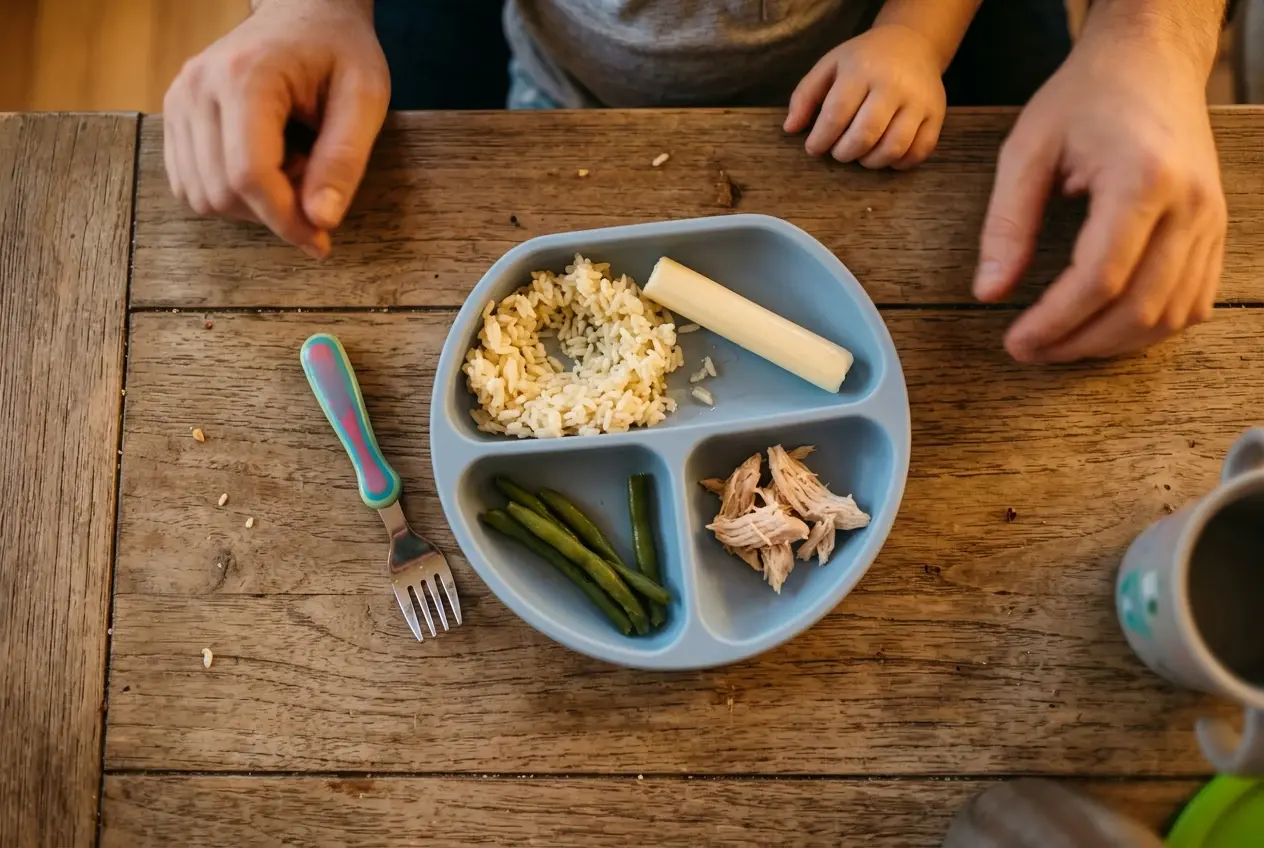
The anchor rule is simple: every plate at every dinner includes at least one food that person already eats. That food is the anchor. It is the reason a child can sit down at the table without bracing for a fight.
The anchor does not have to be the main dish. Rice, bread, a fruit, or a cheese stick all work. What matters is that it is on the plate, served without comment, and that nobody has to ask for it.
A few practical points make the rule work:
- Serve the anchor with the meal, whatever else gets eaten. If it is handed out only after the child eats other foods, dinner turns into a negotiation over bites.
- Other foods sit beside it. The rest of the plate holds whatever the family is eating, offered in a small portion with no pressure to finish it.
- The anchor can repeat. If bread is the anchor for three dinners in a week, that is fine. The goal is a calm table, and variety comes from the foods around the anchor.
The adult in charge decides what is served and when. The child decides whether to eat it and how much. Splitting the job this way removes most of the conflict, because nobody is being asked to do the other person’s part.
Build-your-own dinners: one meal, components served separately
Build-your-own dinners are the easiest way to apply the anchor rule, because the components sit separately and each person assembles a plate. You cook one meal, but it is served in parts.
Some formats that work well:
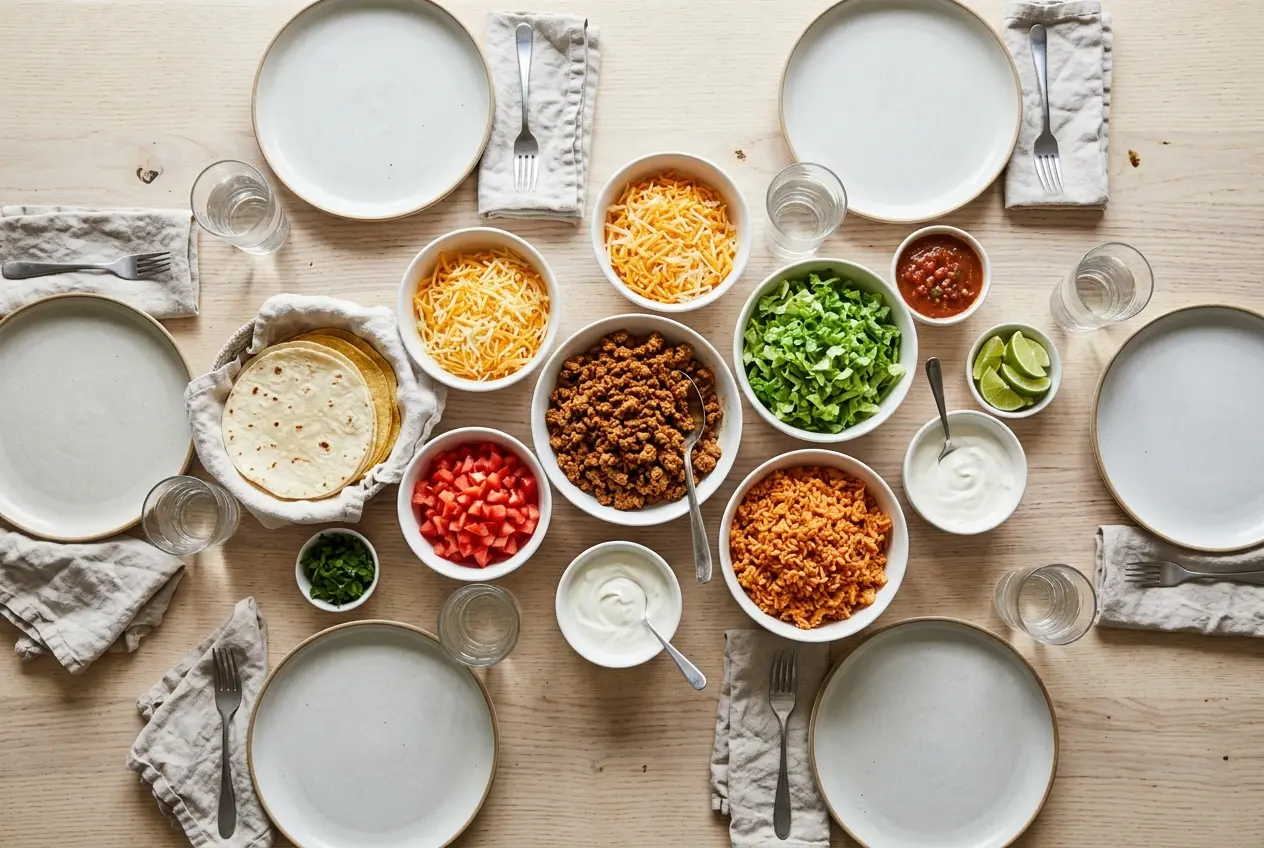
- Taco night: seasoned meat or beans, tortillas, shredded cheese, lettuce, tomatoes, rice, and sour cream in separate bowls.
- Pasta bar: plain pasta, red sauce, a meat or bean topping, steamed broccoli, and parmesan.
- Rice bowls: rice, a protein, one or two cooked vegetables, and a sauce on the side.
- Baked potato bar: potatoes with cheese, butter, chili or beans, and a vegetable.
- Sheet pan dinner served apart: chicken pieces, roasted vegetables, and a starch, each on its own section of the pan or plate.
- Sandwich or wrap night: breads, fillings, and cut vegetables laid out in the middle of the table.
One adaptation helps with many dishes: cook the components plain, then add the sauce or seasoning to the adult portions at the end. A child who eats plain chicken and a family member who wants it in curry sauce can share the same pan.
Serving food in separate bowls also lets a child see and smell a new item without it touching the safe food. For more ideas on introducing unfamiliar foods at the table, the post on how to get picky eaters to try new foods covers exposure in more detail.
A simple weekly menu grid: anchor, protein, color, new-or-familiar
A weekly grid keeps the structure visible. Each dinner gets four decisions: the anchor, the protein, the color (a fruit or vegetable), and whether the meal is new or familiar. Keep the “new” slot to one or two dinners a week so most of the menu stays predictable.
Here is an example of how a filled-in grid might look for a family with a child who eats pasta, bread, and cheese:
Night Anchor Protein Color New or familiar Monday Tortillas Seasoned ground turkey Shredded lettuce, tomato Familiar Tuesday Plain pasta Meatballs Steamed broccoli Familiar Wednesday Rice Baked chicken Roasted carrots New (carrots roasted instead of raw) Thursday Bread Cheese and turkey sandwiches Cucumber slices, grapes Familiar Friday Baked potato Chili or beans Corn, side salad Familiar Saturday Pancakes Eggs Sliced strawberries Familiar Sunday Rice or pasta Slow cooker chicken Green beans New (green beans)
This grid only shows the layout. Replace each entry with foods from your own safe lists.
The columns do different jobs. The anchor column protects the child’s plate. The protein and color columns act as prompts so the plan does not drift into seven nights of pasta. The new-or-familiar column keeps you from introducing something unfamiliar every night, which is a common reason plans collapse by midweek.
If you need recipes to slot into the grid, the collection of 25 healthy weeknight dinners kids will actually eat is a good place to look for meals that can be served in parts.
How to check nutrition across the week instead of meal by meal
Judging every dinner on whether it is perfectly balanced puts a lot of pressure on a single plate. A child may eat only rice and chicken on Tuesday and a lot of fruit on Thursday. Looking across the week gives a more realistic picture.
At the end of the week, look at the grid and ask a few plain questions:
- Did a protein food appear at most dinners?
- Did a fruit or vegetable appear at every dinner, even if it was only offered and not eaten?
- Were whole grains, beans, or other fiber-rich foods offered more than once?
- Was there a source of calcium or another dairy or fortified alternative somewhere in the day?
- Did the week include foods in several different colors?
A check mark means the food was offered, not that every person ate it. Offering is what you control. Repeated, low-pressure offers are how a food becomes familiar over time.
Breakfast, lunch, and snacks count toward the same weekly picture, so a child who eats little at dinner may still be covered elsewhere. If you have specific worries about growth, a very short safe food list, or a child who is dropping foods, raise it with your child’s pediatrician instead of trying to solve it with a menu.
Handling the night it all goes sideways: the no-fight fallback plate
Some nights the plan falls apart. Someone is tired, someone is sick, or the build-your-own bar goes untouched. Deciding on a fallback plate in advance prevents a new argument from starting over what to do.
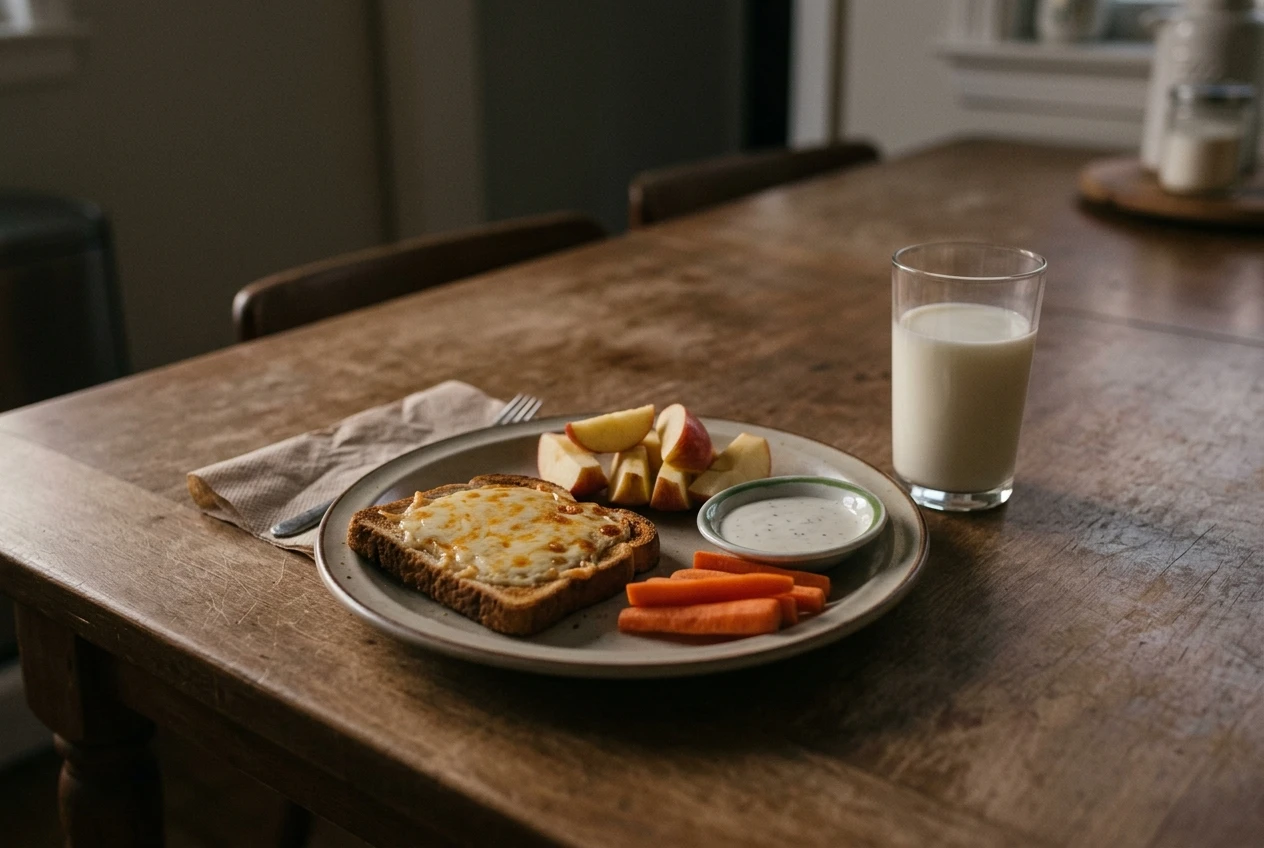
A no-fight fallback plate is a short, standard meal made of safe foods that takes five minutes or less. It might be:
- Toast or a tortilla with cheese
- A fruit the child reliably eats
- A cut vegetable with a dip they accept
- A glass of milk or water
Settle the rules ahead of time. It is the same plate every time, it is plain, and it is available only when the child has declined the dinner offered. Serve it calmly and without commentary. It is dull on purpose, so it never becomes the meal a child prefers to the real dinner.
The fallback plate is a fixed, five-minute meal and never a second dinner made to order. It keeps the child fed and the cook out of a second round of cooking, and it lets everyone else finish the meal in peace.
Printing the menu and letting kids pick one slot
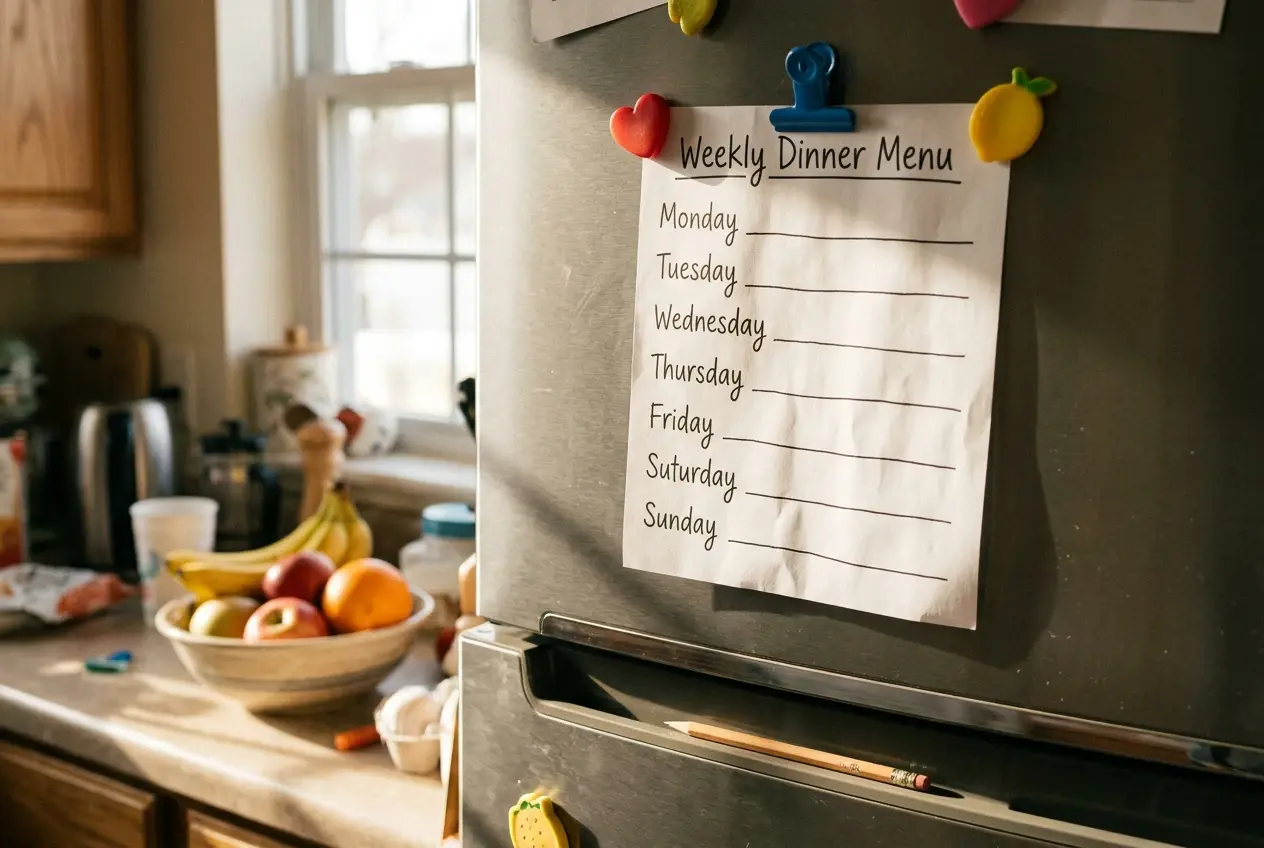
Once the week is planned, print the menu and post it where everyone can see it, such as on the fridge. A visible menu answers “what’s for dinner?” before it turns into a complaint, and it shows the family that dinner is already decided.
Give each child one slot to choose. A child might pick Friday’s build-your-own theme or choose which vegetable appears on Tuesday from a short list you approve. Limit the choice to a decision you are happy with either way, such as “broccoli or green beans” or “tacos or rice bowls.” Having some say gives a child a reason to be interested in a dinner they helped select.
Update the menu weekly. Swap in a meal that worked, drop one that did not, and move the new-food slot to a different night. After a few weeks you will have a rotation of dinners that suit the whole table.
Plan this week’s seven dinners
Fill in your family’s safe food anchors on a one-page weekly menu printable, put it on the fridge, and plan just this week’s seven dinners. One week is enough to see whether the structure lowers the tension at your table, and you can adjust the grid from there.

Hi, I’m Monica, creator of NicaFitness. I’m passionate about helping busy moms stay active and healthy through simple fitness tips, quick workouts, and nutritious meal ideas. My mission is to make healthy living realistic and achievable for busy lifestyles.