Most food gets thrown out because nobody can see what is in the kitchen. By the time the forgotten lettuce or frozen chicken turns up, it is past use and the money is gone.
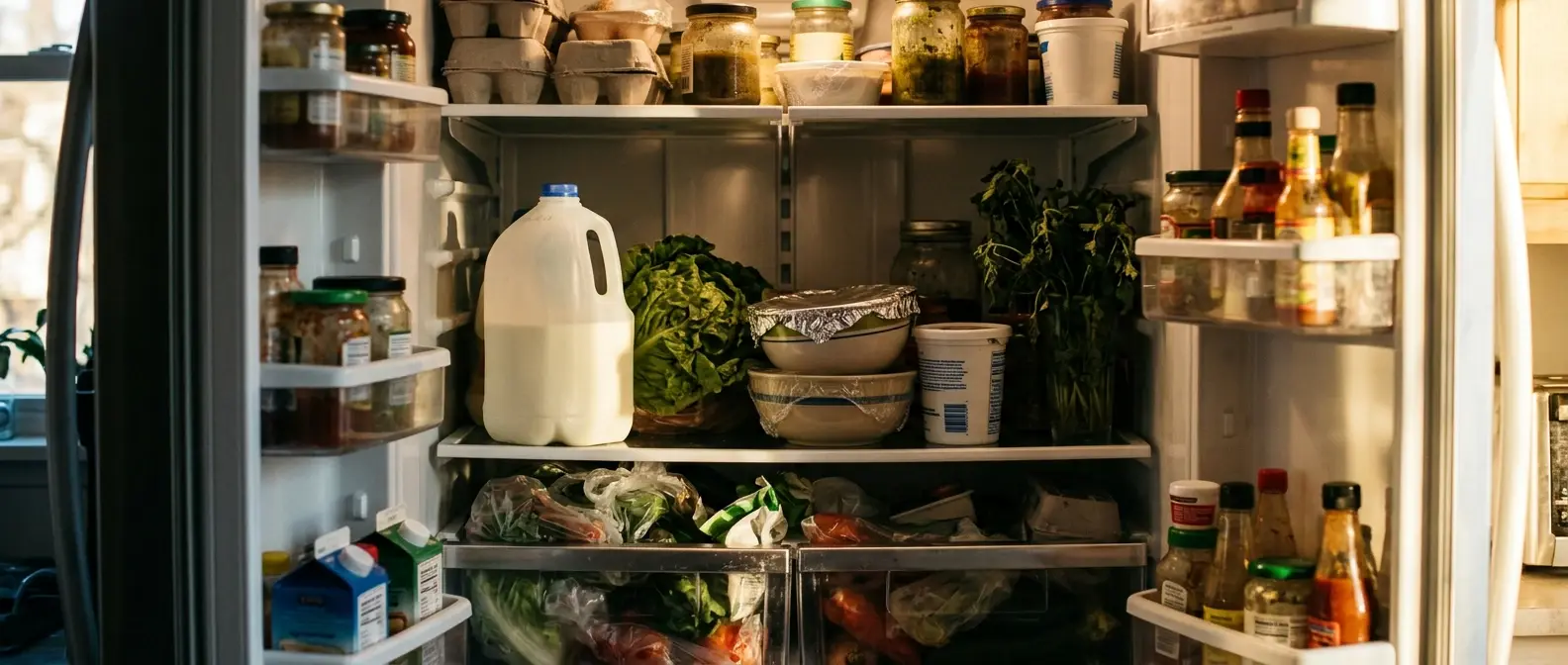
Here is one weekly habit that fixes it: a 10-minute check of the fridge, freezer and pantry before you write the grocery list. It is the simplest way to reduce food waste and save money without overhauling how you cook.
Why food ends up in the bin (and why it’s rarely a willpower problem)
Food gets wasted for a few predictable reasons, and discipline is not one of them.
- You buy something you already have. Without a current picture of the kitchen, you shop from memory, and memory is unreliable at the end of a long week.
- Food is out of sight. Items at the back of a shelf or the bottom of a freezer drawer are never in your mind when you plan dinner.
- Plans change. A sick kid, a late meeting or a school event turns Wednesday’s planned meal into takeout, and the ingredients wait.
- Nothing is marked “use first.” Everything looks equally fine until one item is not.
Each of these is a visibility problem, so the fix is visibility. A short, regular look at what you have, done before you shop, solves most of it. A meal plan helps too, but a plan built without knowing your stock often adds to the pile. If you want the full planning system, the guide to meal planning for busy moms covers it. This habit comes first, because it tells you what the plan should start with.
The 10-minute weekly check: fridge, freezer, pantry, in that order
Do the check right before you write your grocery list, on the same day each week. Set a timer to keep it short. The order matters because the fridge holds the food that spoils fastest, and the pantry holds the food that keeps longest.
Fridge (about 4 minutes)
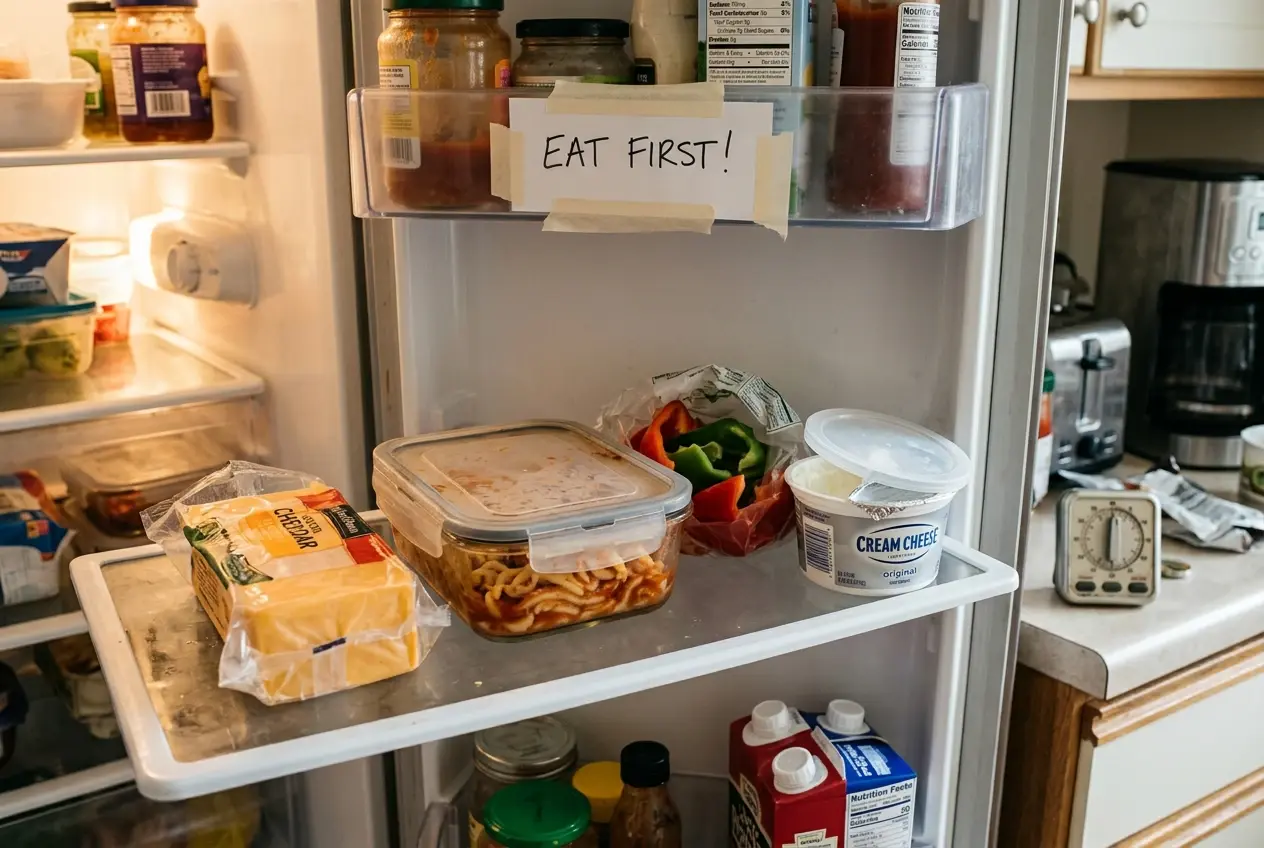
Look shelf by shelf, and lift items out only when something is hiding behind them. Pull forward anything that needs eating soon: opened packages, cut produce, leftovers, dairy near its date. Put those items at eye level or on one “eat first” shelf. Throw out anything clearly spoiled, and wipe up any spills while you are there.
Freezer (about 3 minutes)
Look for what is buried. Note any meat, bread, produce or prepared meals you had forgotten, and write them down. Anything with freezer burn or no label goes into a “use soon” group, because quality drops the longer food sits.
Pantry (about 3 minutes)
Scan the shelves for duplicates, open boxes and things near their best-by date. Check the quantities of what you use constantly, such as pasta, rice, canned tomatoes, beans, oats and cooking oil. You are looking for two things: what is running low and what you could build a meal from tonight.
Write as you go. A pen and one sheet of paper turn the check into a record you can plan from.
How to set up a simple pantry inventory you’ll actually keep updated
An inventory fails when it is too detailed. A spreadsheet listing every spice and its purchase date takes more effort than it saves, and it is easy to stop updating. Keep it to one page with three sections: fridge, freezer, pantry.
For each section, list only the items that matter for planning:
- Proteins (fresh and frozen)
- Produce that is already cut, opened or ripening
- Dairy and eggs
- Grains, pasta and canned goods
- Bulk items such as flour, sugar and cereal
Beside each item, add a quantity and a “use by” or “use first” mark. Skip items you will obviously remember, such as condiments in the door. The list should be short enough to update in the same 10 minutes you spent checking.
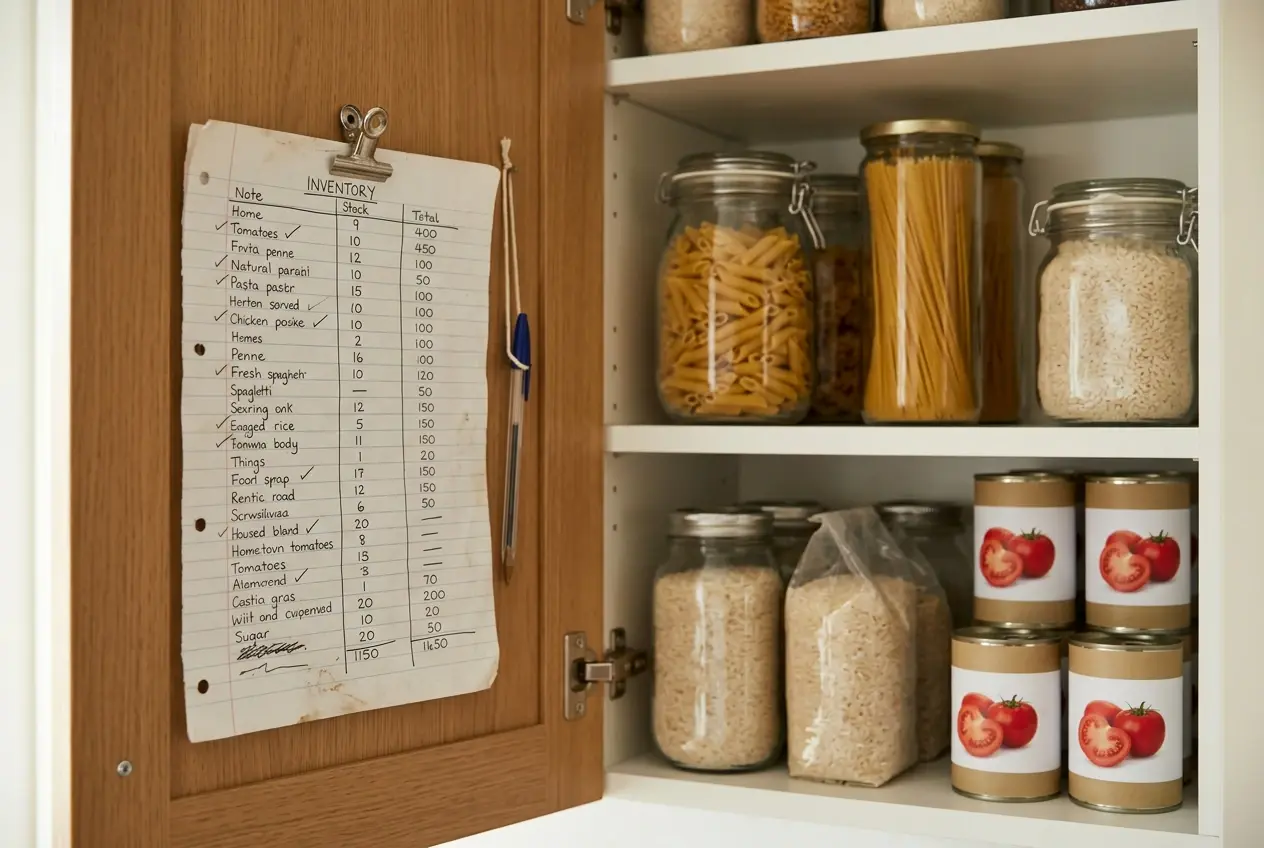
Keep the sheet where you will see it, such as inside a cabinet door or on the fridge. If it lives in a folder or a drawer, it will not get used. A printable with a fridge, freezer and pantry column and a “use first” box does this job well, and it keeps the weekly check to a single page. You can download one at the end of this article.
Use-it-first: turning what’s expiring into this week’s dinners
Once the check is done, circle or highlight everything that needs to be eaten in the next few days. This is your use-it-first list, and it becomes the starting point for your dinners.
Build meals backwards from that list. A few common pairings:
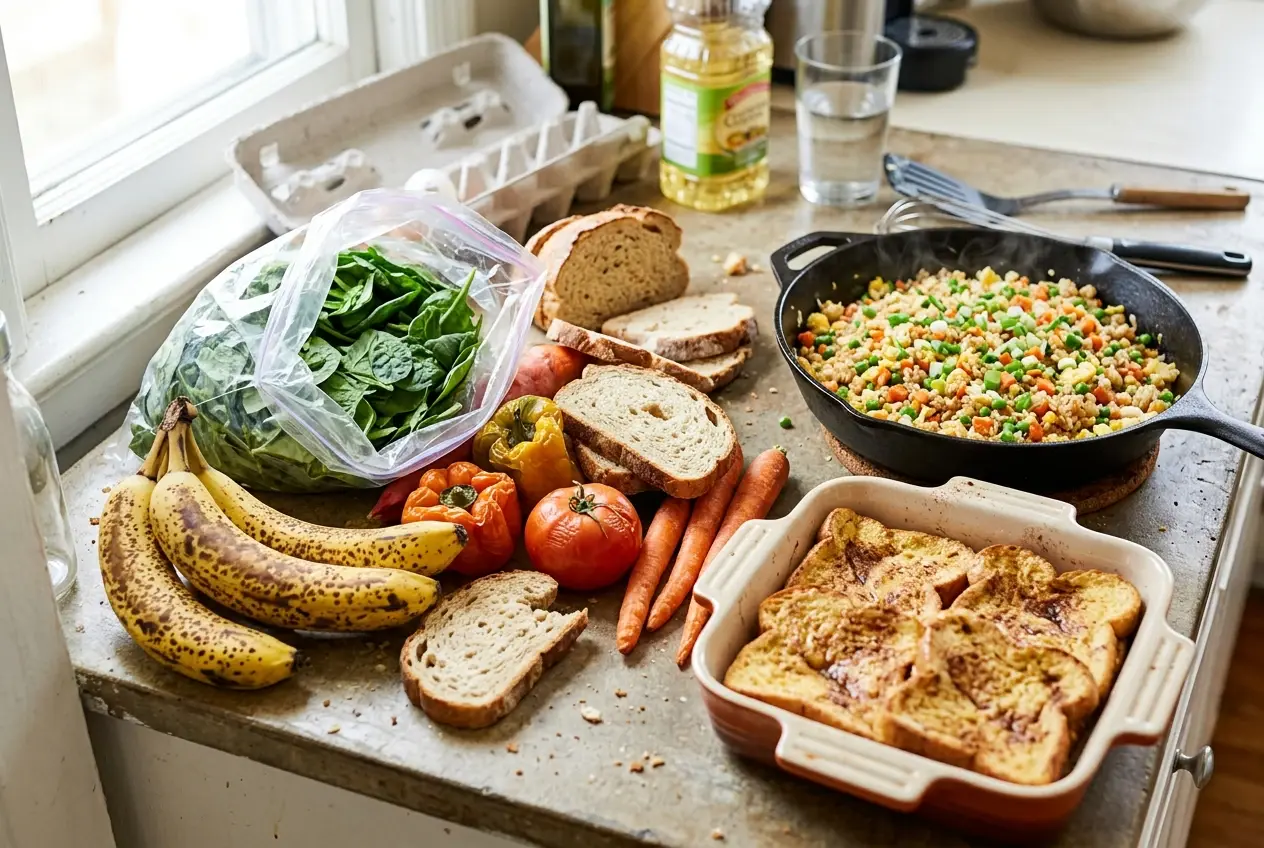
- Soft vegetables and a bit of leftover meat become fried rice, a frittata or a soup.
- Ripe bananas become muffins or go into the freezer for smoothies.
- Half a bag of spinach goes into pasta, eggs or a quesadilla.
- Stale bread becomes French toast, croutons or breadcrumbs.
- Frozen meat you found goes into the fridge to thaw for the next dinner or two.
Put the use-it-first items into your first two or three dinners of the week, since those are the meals the food has to last until. Meals planned for the weekend can use the pantry and freezer, which keep better. If you want help picking recipes around what you have, the healthy weeknight dinners kids will eat list is a good place to look for ideas that use common ingredients.
Shop from your inventory, not from memory
With the inventory and a draft meal plan in front of you, write the grocery list by comparing the two. For each planned dinner, list the ingredients, then cross off everything you already have in enough quantity. What remains is your list.
Add replacements for staples that are running low, but only those. If you have half a jar of pasta sauce and plan two pasta nights, you may need one more jar. If you have a full one, you do not.
This step is where the money is saved. Every item you cross off because you spotted it in the inventory is a purchase you did not make twice. Over several weeks, you also stop overstocking things you only thought you needed.
Once the list is written, sort it by the order you walk through the store so the trip is quicker and you are less tempted by extras. The post on how to organize your grocery list walks through that.
Storing and freezing food so it lasts longer
Food that is stored well stays good for more days, which gives you more time to get to it.
- Keep older items in front. When you unpack groceries, move the older package forward and put the new one behind it.
- Use clear containers. You eat what you can see. Clear boxes for cut fruit, leftovers and snacks make the contents obvious.
- Freeze before the food declines. If you will not use bread, meat, shredded cheese or ripe fruit within a couple of days, freeze it that day instead of waiting.
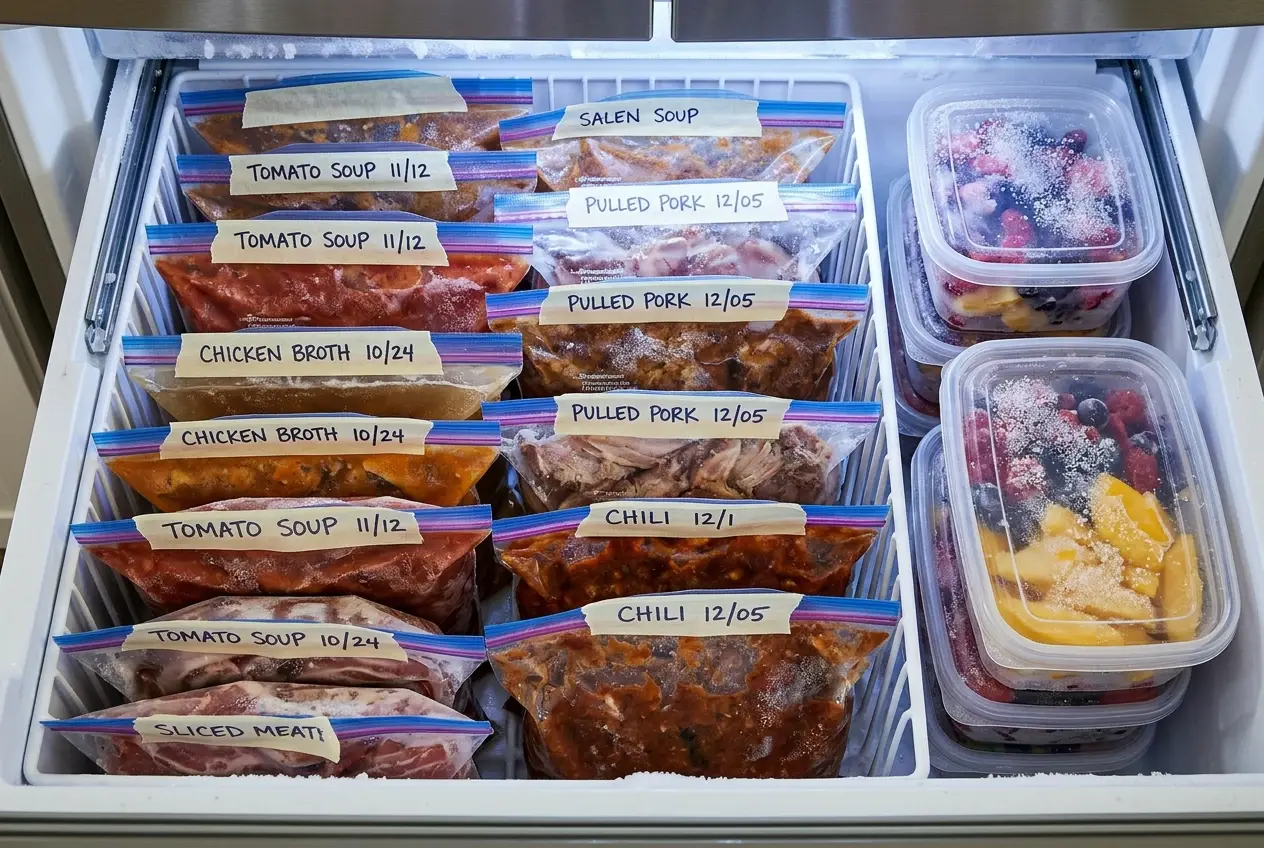
- Freeze in useful portions. Flat bags of meat or soup thaw faster and stack neatly. Portions sized for your family prevent thawing more than you need.
- Label everything. Write the name and the date on each bag or container. Unlabeled frozen food tends to get ignored.
For how long particular foods keep, follow guidance from your national food safety agency, particularly for cooked leftovers and raw meat. If you want ready-made ideas for what to freeze, the easy healthy freezer meals list gives you dinners that store well.
Leftovers, scraps and the one-pan ‘clean-out’ night
Pick one night a week as a clean-out night, ideally the evening before you shop, when the fridge is at its emptiest and the odds and ends are at their largest. Dinner that night is made from whatever is left.
These formats are easy to repeat:
- A sheet pan or skillet dinner with chopped vegetables and any protein
- Fried rice or a grain bowl using cooked rice and what is in the crisper
- Quesadillas, wraps or burritos with leftover meat, beans and cheese
- Soup built from broth and any vegetables that need using
- A baked pasta or casserole with the last of the sauce and cheese
Keep a bag in the freezer for scraps. Onion ends, carrot peels, celery tops and herb stems can be collected and later simmered into stock. Leftover cooked meals can be packed into lunches the next day, so decide at cleanup time who is taking what.
The clean-out night also gives you information. If the same food keeps ending up there, you are buying more of it than your family eats, and next week’s list should shrink.
Tracking what you save so the habit sticks
A habit continues when you can see the benefit, and the evidence is already in your kitchen and on your receipts.
Add three small lines to the bottom of your weekly sheet:
- Items thrown out this week. Just write a short list. If the list shrinks over time, the habit is working.
- Items used first. Note the foods you rescued with the use-it-first list.
- Grocery total. Write down what you spent. Compare it with the week before and, later, with the month before.
Do not expect a dramatic change in week one. The early gains are usually small: one fewer duplicate item, one less forgotten container. Over several weeks, the grocery total and the throw-out list are the two numbers to watch.
Run the check on the same day each week, fill in the sheet, and use it as the starting point for your meal plan and your list.
Download the free pantry inventory and weekly use-it-first printable, then pair it with your meal plan before your next grocery trip.

Hi, I’m Monica, creator of NicaFitness. I’m passionate about helping busy moms stay active and healthy through simple fitness tips, quick workouts, and nutritious meal ideas. My mission is to make healthy living realistic and achievable for busy lifestyles.