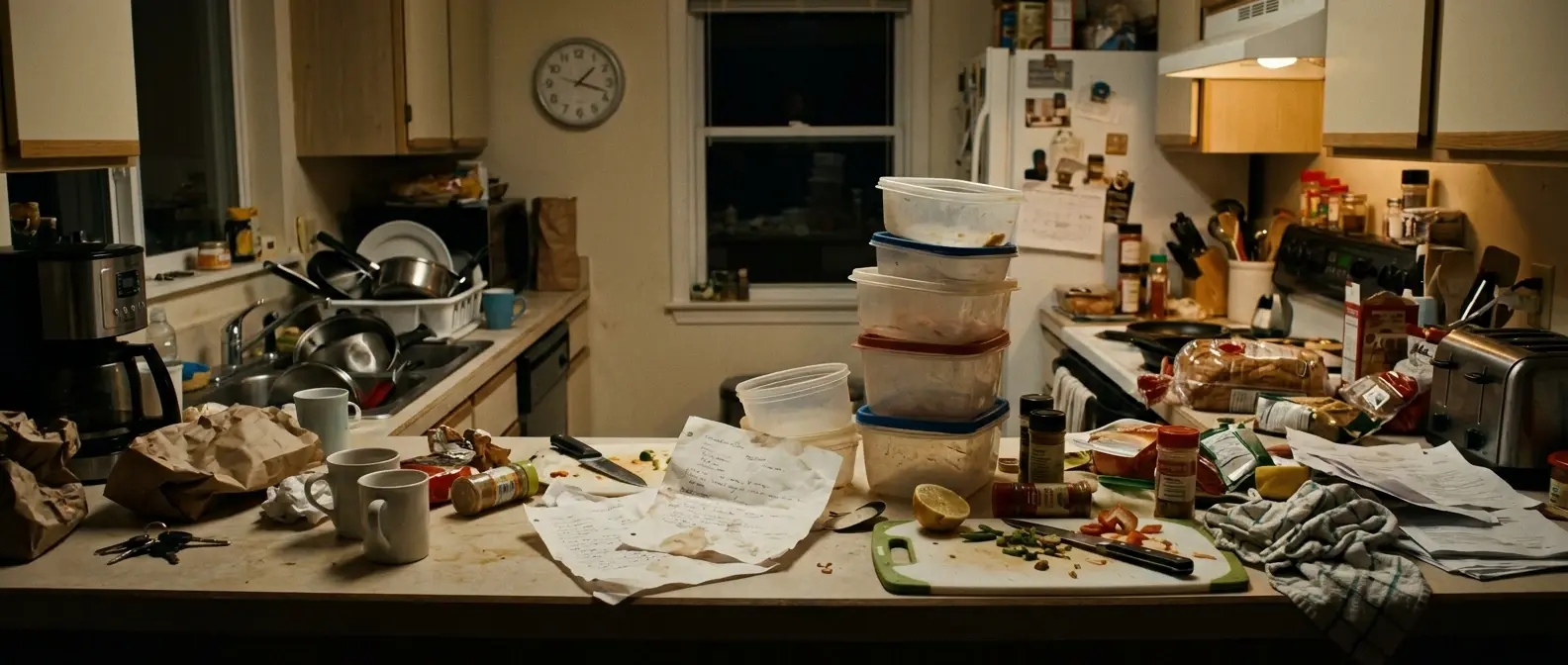
Most weeks start with good intentions and a stack of recipes torn from somewhere online, and most weeks end with a freezer full of mismatched containers and a kitchen that still eats up two hours a night. The problem usually isn’t the food. It’s the process around the food, the part nobody writes printables for.
This article skips the recipes. You already have plenty of those, and more sitting in how to build a healthy family meal plan that actually works if you need them. What follows are five changes to how you move through the week in the kitchen, the kind that shave real hours off your routine instead of adding another list of ingredients to buy.
Why Most Meal Prep Advice Fails Families With Packed Schedules
Most meal prep content assumes you have a free Sunday afternoon, a stocked pantry, and nobody interrupting you to find a missing shin guard. It hands you seven new recipes a week and calls that a system. It isn’t. A system is something you can run on autopilot after the third or fourth time through it, and recipes alone don’t give you that.
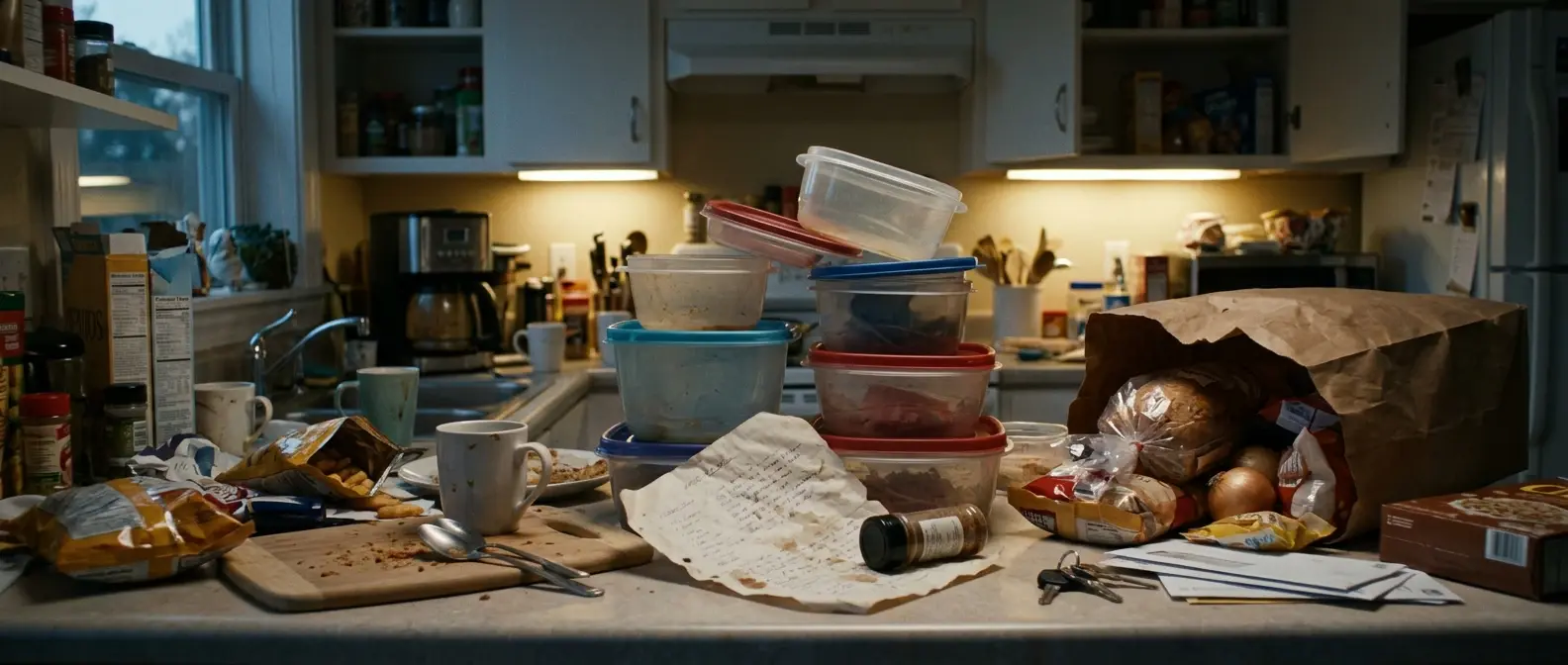
What actually cuts time is changing the shape of the work: how much you chop at once, how many times you cook the same base ingredient, where the grab-and-go food lives, how the list gets built, and how the freezer tells you what’s inside without you opening five containers to check. Those five things are the hacks below, and they’re built to slot into one repeatable weekly routine rather than live as separate tips.
Hack 1: The 20-Minute Sunday Chop Session
Pick one 20-minute window, Sunday afternoon or evening works for most families, and use it for exactly one job: chopping. Not cooking, not seasoning, just cutting everything raw that you’ll need across the week into ready-to-use pieces.
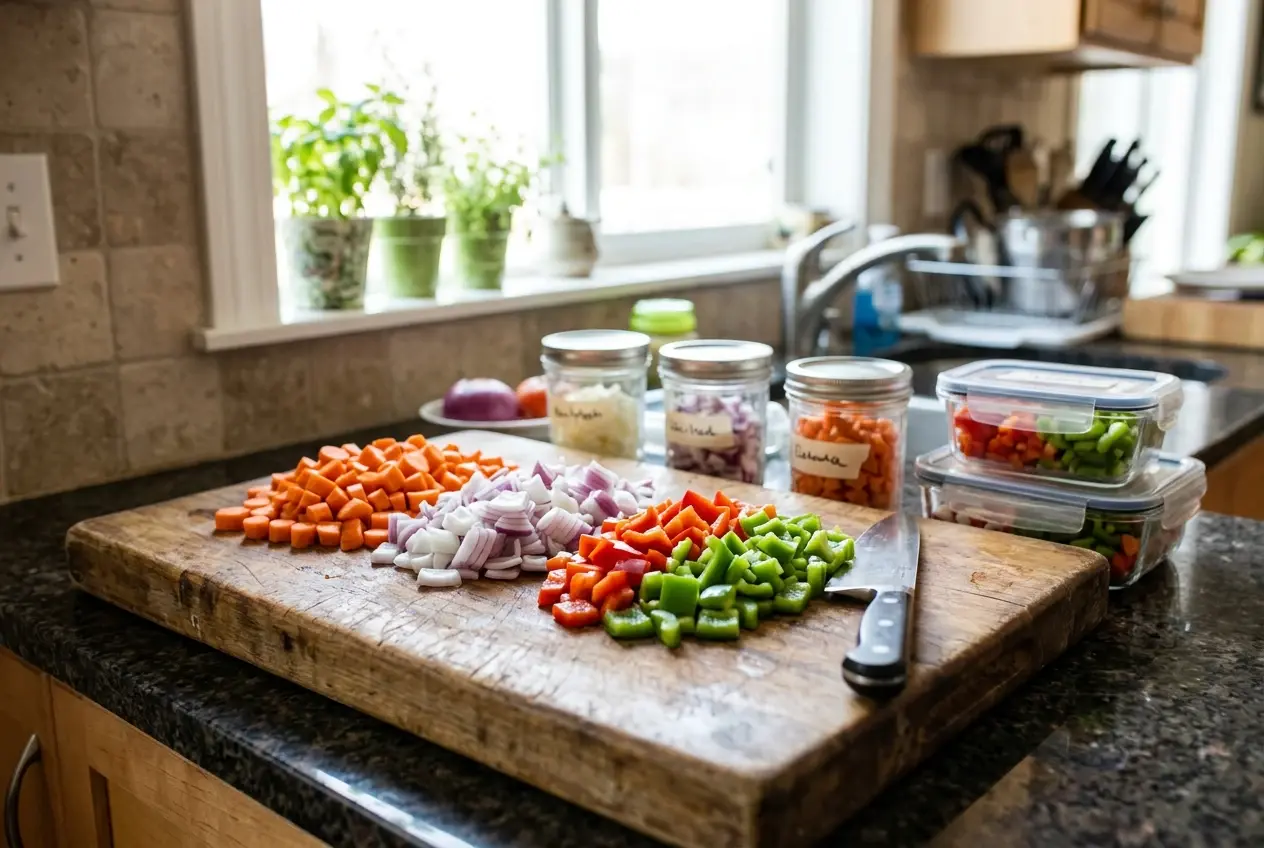
Wash and dice onions, peppers, and carrots. Trim and portion chicken breasts or ground meat into the sizes your recipes call for. Wash and chop whatever salad greens or vegetables you’ll use for lunches. Store each in its own container in the fridge, labeled with the day or meal it’s meant for.
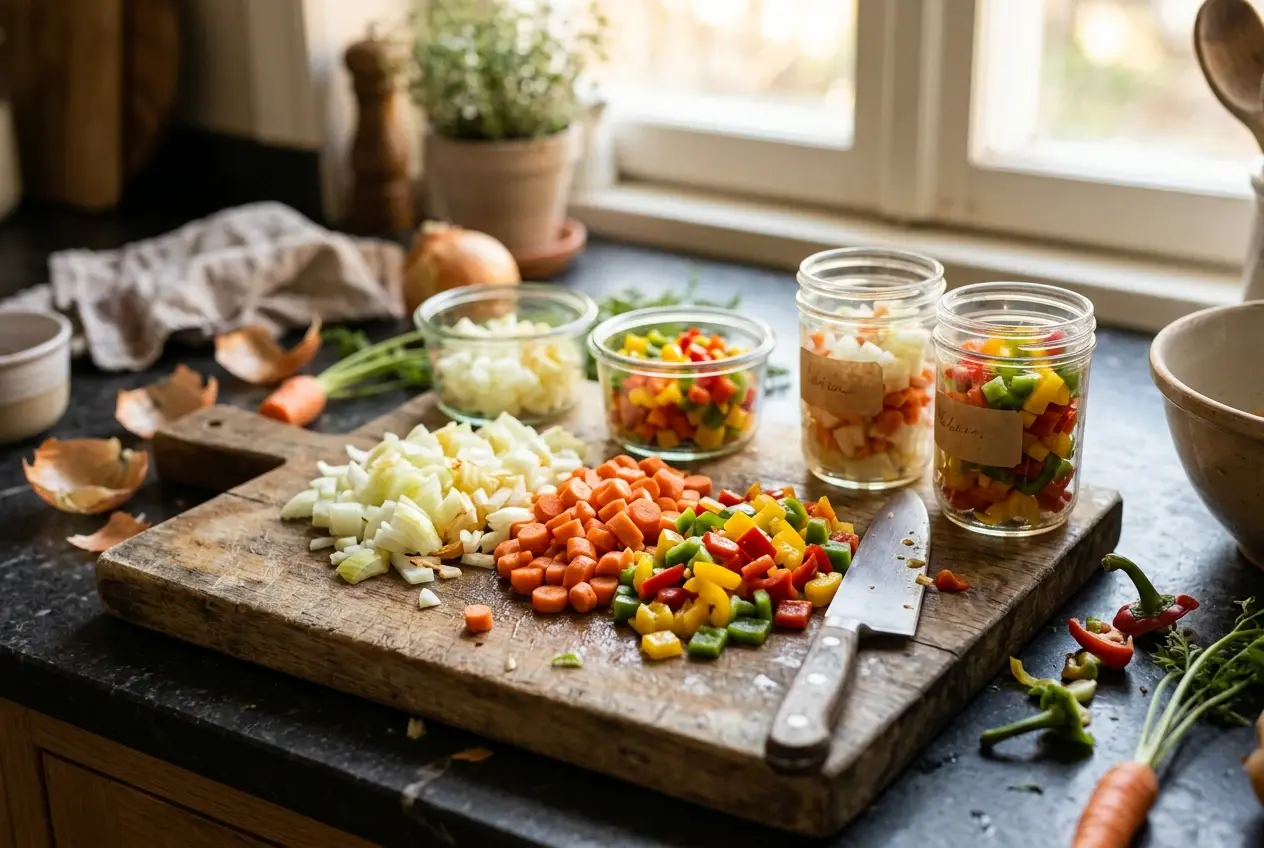
The reason this saves time isn’t that chopping is slow, it’s that chopping interrupts cooking. Every weeknight meal that starts with “first, dice an onion” adds five to ten minutes of standing-and-cutting time before the actual cooking even starts. Doing all of it in one sitting, with one cutting board and one cleanup, means weeknight cooking becomes assembly instead of prep.
Hack 2: Cook Once, Eat Twice (Double-Batch Everything)
Whenever you’re already cooking rice, ground beef, shredded chicken, roasted vegetables, or a pot of beans, cook double the amount. The extra pot of water or the extra ten minutes in the oven costs you almost nothing compared to cooking that same ingredient from scratch a second time later in the week.
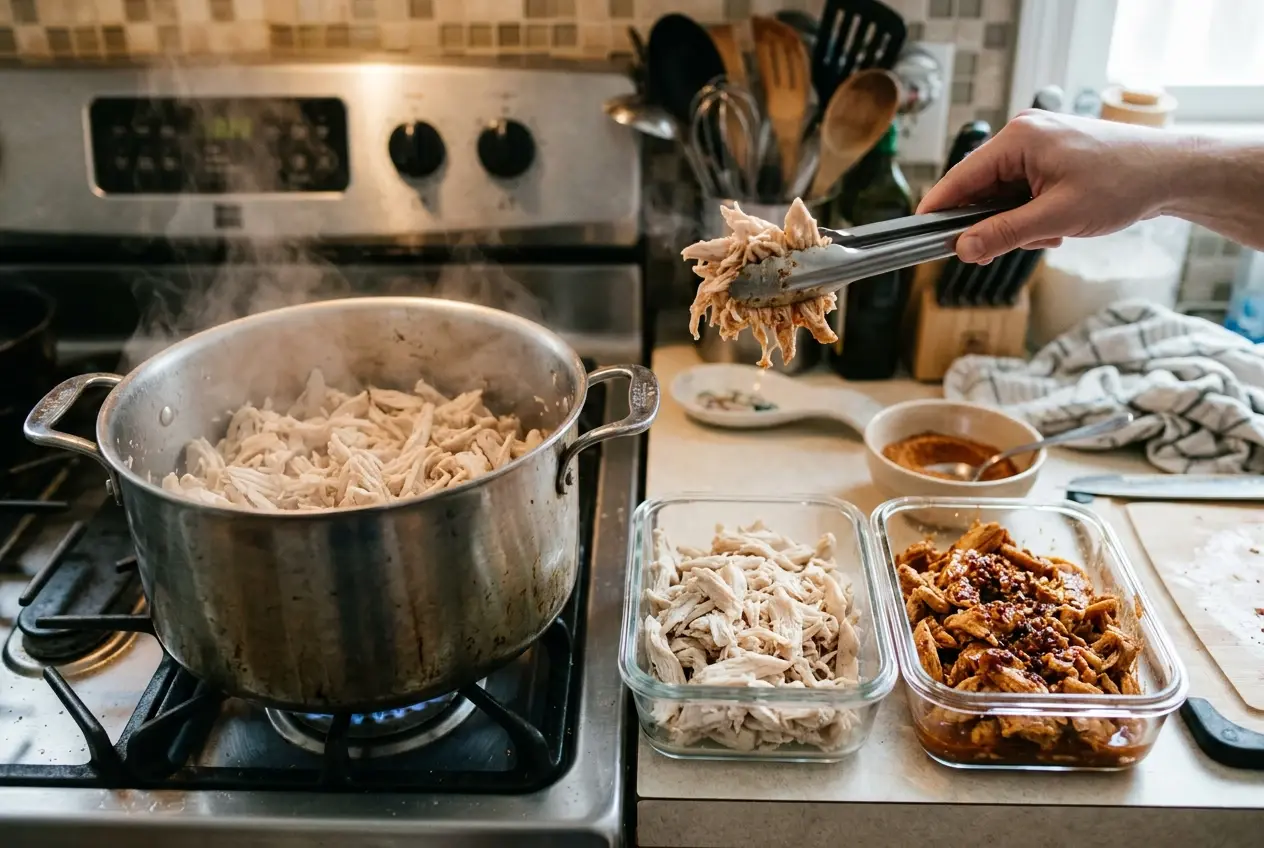
The trick is choosing bases that can become two different meals so it doesn’t feel like leftovers twice. Double a batch of shredded chicken and it can go into tacos on Monday and a chicken salad or soup on Thursday. Double a tray of roasted vegetables and they can sit alongside pasta one night and get folded into a grain bowl another. Double-batching ground beef works the same way across tacos, pasta sauce, and a quick stir-fry.
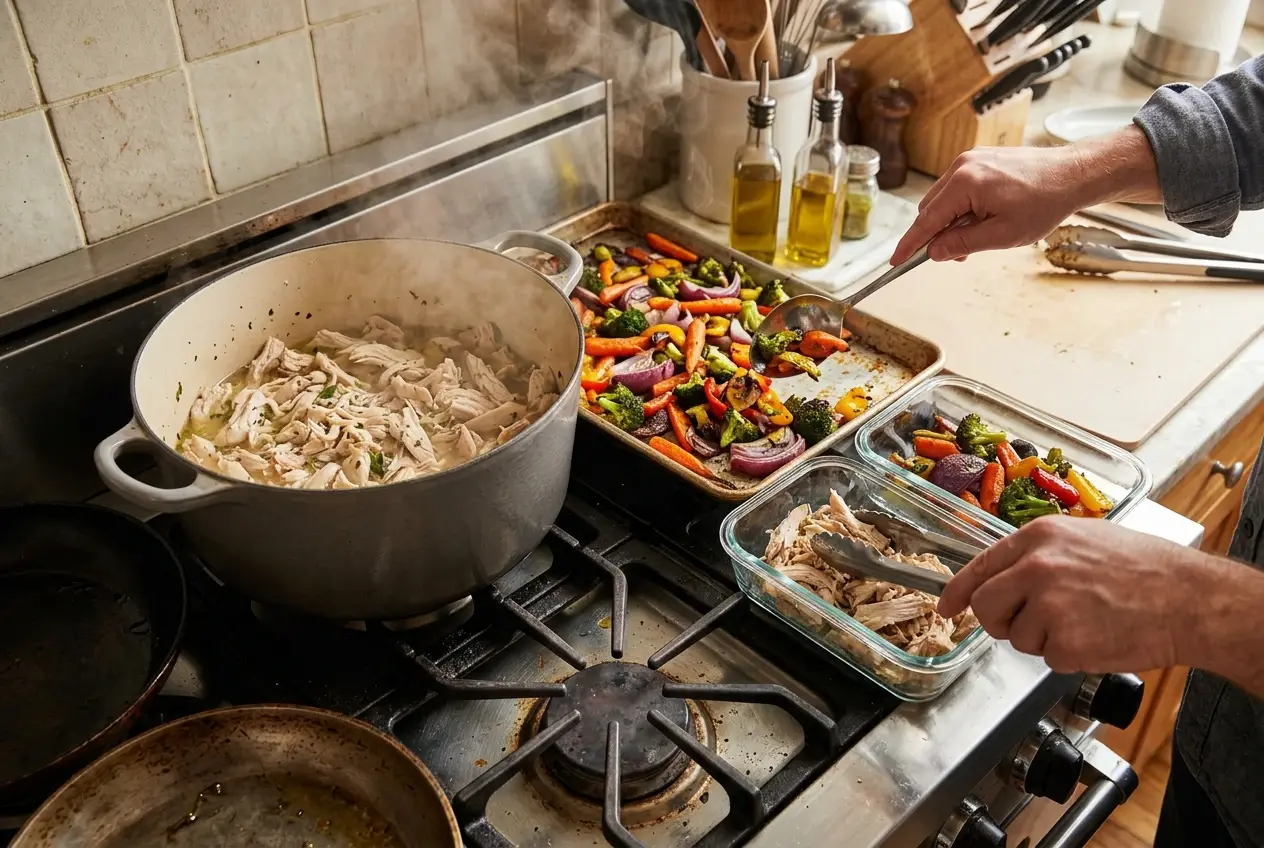
This is the hack most families skip because it doesn’t feel like it’s saving anything in the moment, you’re just cooking a bigger pot. But it’s the one that compounds the most across a month, because it removes an entire cooking session from your week without removing a meal. If you need a running list of what freezes and reheats well, 15 easy healthy freezer meals for busy moms is worth keeping nearby while you plan which batches to double.
Hack 3: The Grab-and-Go Breakfast and Snack Station
Mornings fail for the same reason every day: everyone needs something different, at the same time, with no warning. The fix isn’t more variety, it’s a fixed location where breakfast and snack items already live, pre-portioned, so nobody has to think about what’s available.
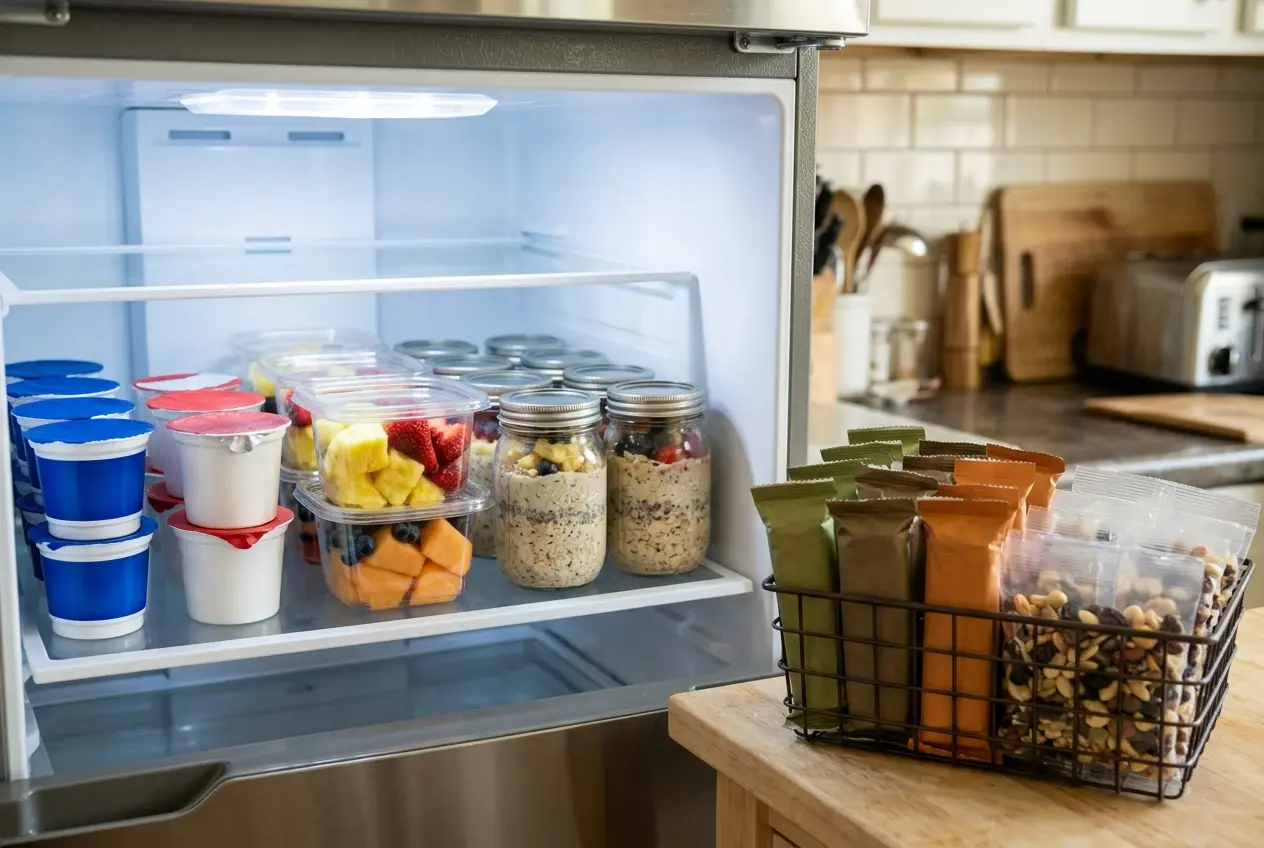
Set up one shelf in the fridge and one basket or bin on the counter or pantry shelf. Stock the fridge shelf with items already split into grab-ready portions: yogurt cups, cut fruit, hard-boiled eggs, pre-made overnight oats in jars. Stock the counter bin with shelf-stable snacks that don’t need supervision: granola bars, trail mix bags, crackers portioned into small containers.
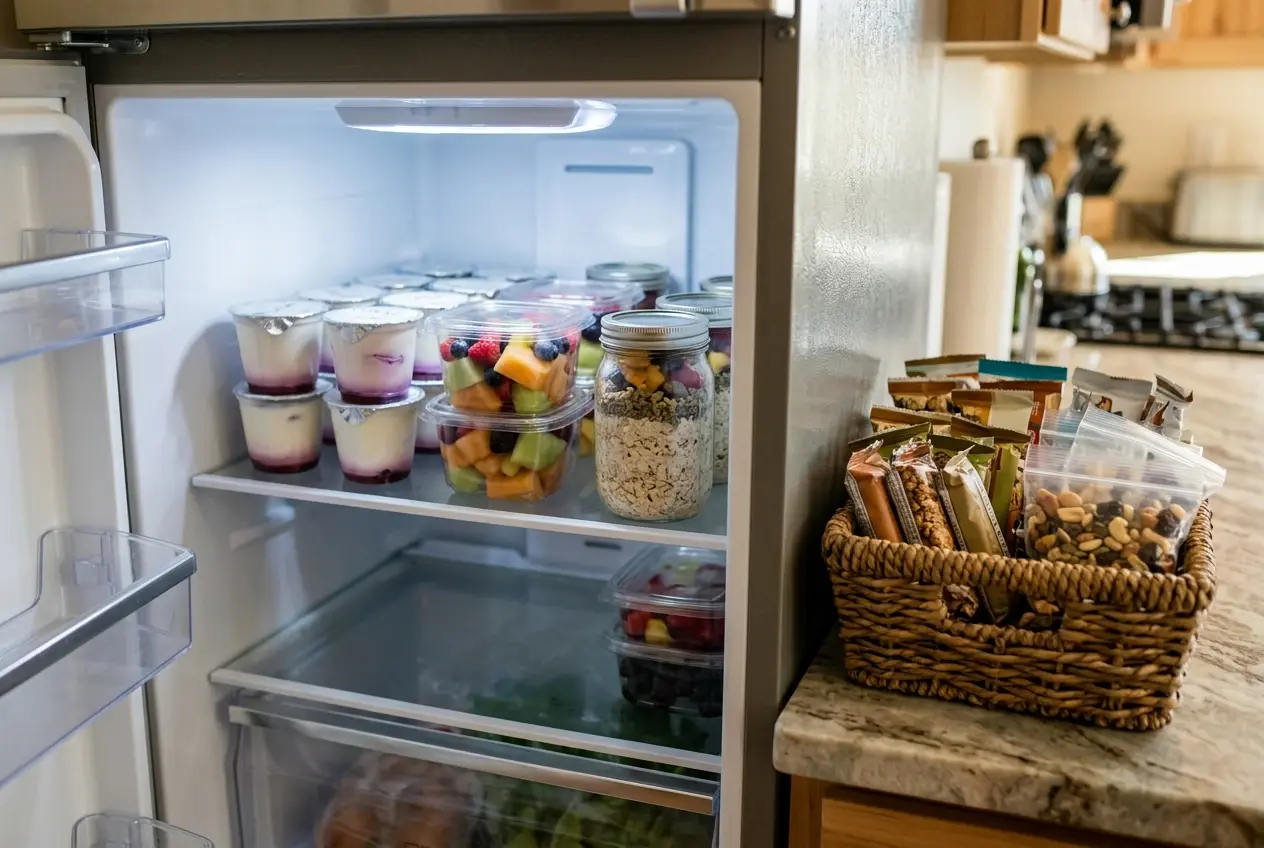
The rule that makes this work is that nothing goes in those two spots unless it’s already ready to eat. No bags of whole apples that still need washing, no boxes of oats that still need measuring. If a kid or a spouse can open the fridge or the bin and have breakfast or a snack in their hand within ten seconds, that’s the station working. For more structure around this, healthy school morning routine for busy moms builds out the rest of the morning around it.
Hack 4: One Grocery List, Built Around What You Already Have
Most families build their grocery list by starting from recipes, which means starting from scratch every single week. A faster approach starts from your pantry and freezer instead: check what’s already on hand, build the week’s meals around using that up first, and only then add to the list what’s missing.
This does two things. It stops food from going bad in the back of the fridge because it never got worked into a meal, and it cuts the list down to genuinely new items instead of duplicates you already own. A ten-minute pantry and freezer check before you write anything down usually trims a grocery list by a third.
Keep the list in one place, a notes app, a printable on the fridge, whatever you’ll actually use, and build it the same way every week: pantry check first, meals second, list last. If list-building is where your planning tends to fall apart, common meal planning mistakes to avoid covers the other places this process tends to break down.
Hack 5: The Freezer Label System That Kills Decision Fatigue
An unlabeled freezer turns every weeknight into a guessing game, and guessing takes time even when it doesn’t feel like it. Standing in front of the freezer trying to remember what’s in the unmarked container, whether it’s still good, and what it was supposed to become, is five minutes you don’t have.
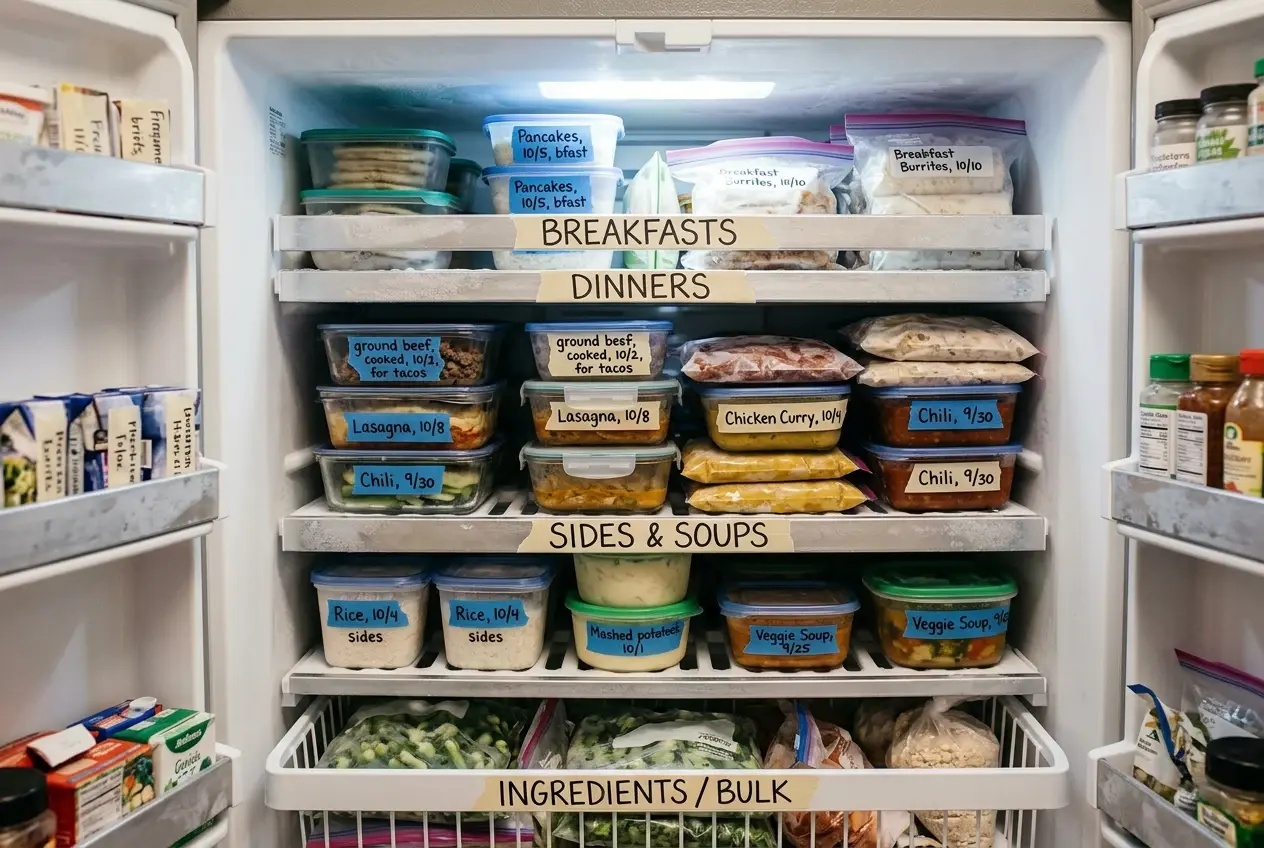
A workable label needs three pieces of information: what’s inside, the date it went in, and how it’s meant to be used, for example “ground beef, cooked, 10/2, for tacos or pasta.” That third piece matters more than people expect. Knowing it’s ground beef doesn’t tell you tonight’s plan, knowing it’s already seasoned for tacos does.
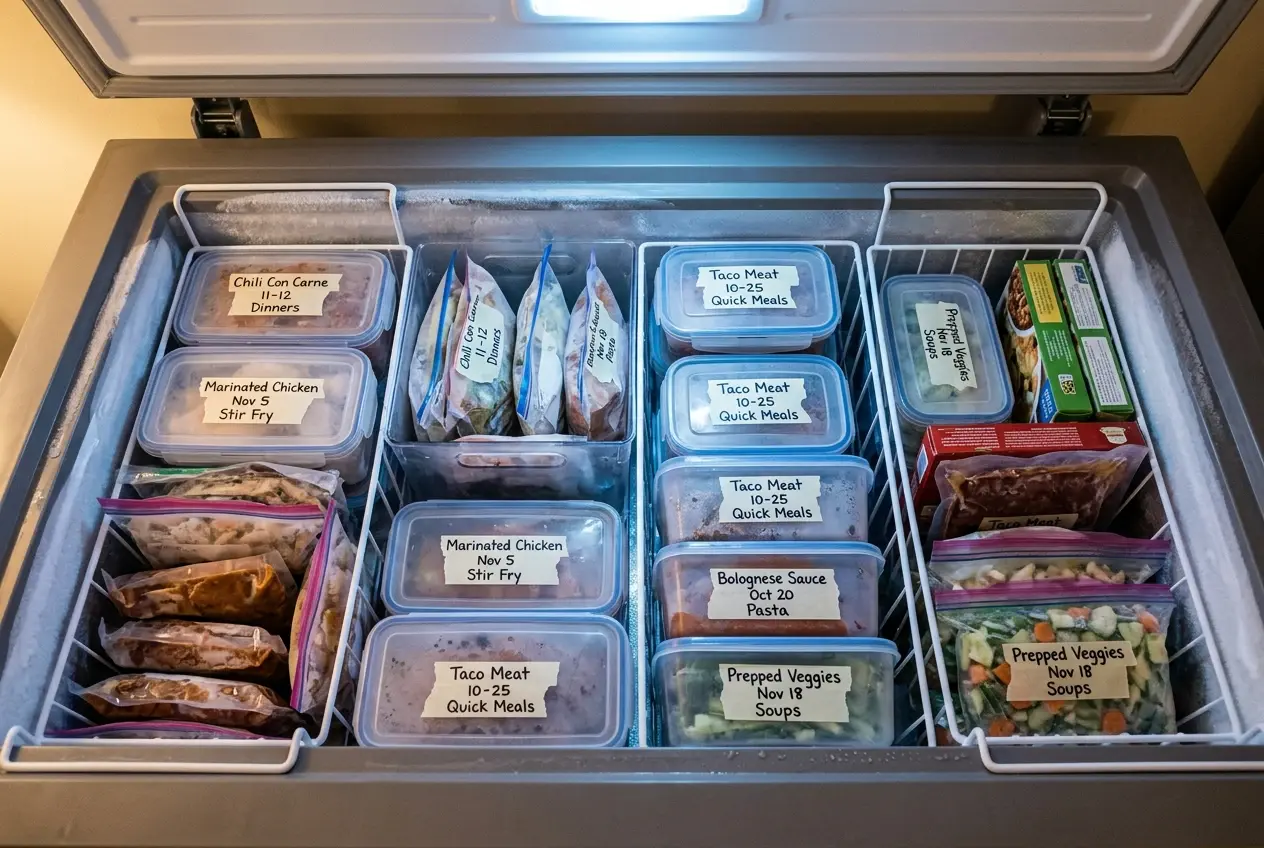
Organize the freezer by meal type instead of by food type if you can, one shelf or bin for breakfast items, one for dinner proteins, one for sides. That way opening the freezer answers “what can I make tonight” instead of just “what do I have.” Combined with the double-batching from Hack 2, this turns your freezer into a second pantry you actually use instead of a storage unit you avoid.
Turning These Hacks Into a Repeatable Weekly Routine
None of these five hacks need to happen on the same day, but they do need a fixed order to become a routine instead of five separate tasks you remember some weeks and forget others.
A workable rhythm looks like this:
-
Check the pantry and freezer, then build the grocery list (Hack 4)
-
Shop
-
Chop everything raw for the week in one sitting (Hack 1)
-
Cook double batches of two or three bases while you’re already cooking dinner (Hack 2)
-
Restock the grab-and-go station the same day (Hack 3)
-
Label anything that goes into the freezer as it goes in, not later (Hack 5)
Run through that order two or three weeks in a row and it stops requiring thought. The point isn’t to do all five perfectly from week one, it’s to pick the order that fits your actual schedule and repeat it until your hands know what to do before your brain has to plan it.
Pair these hacks with a free weekly meal planning printable to turn this routine into something you can repeat without rethinking it every Sunday.
