
Disclosure:
As an Amazon Associate I earn from qualifying purchases.
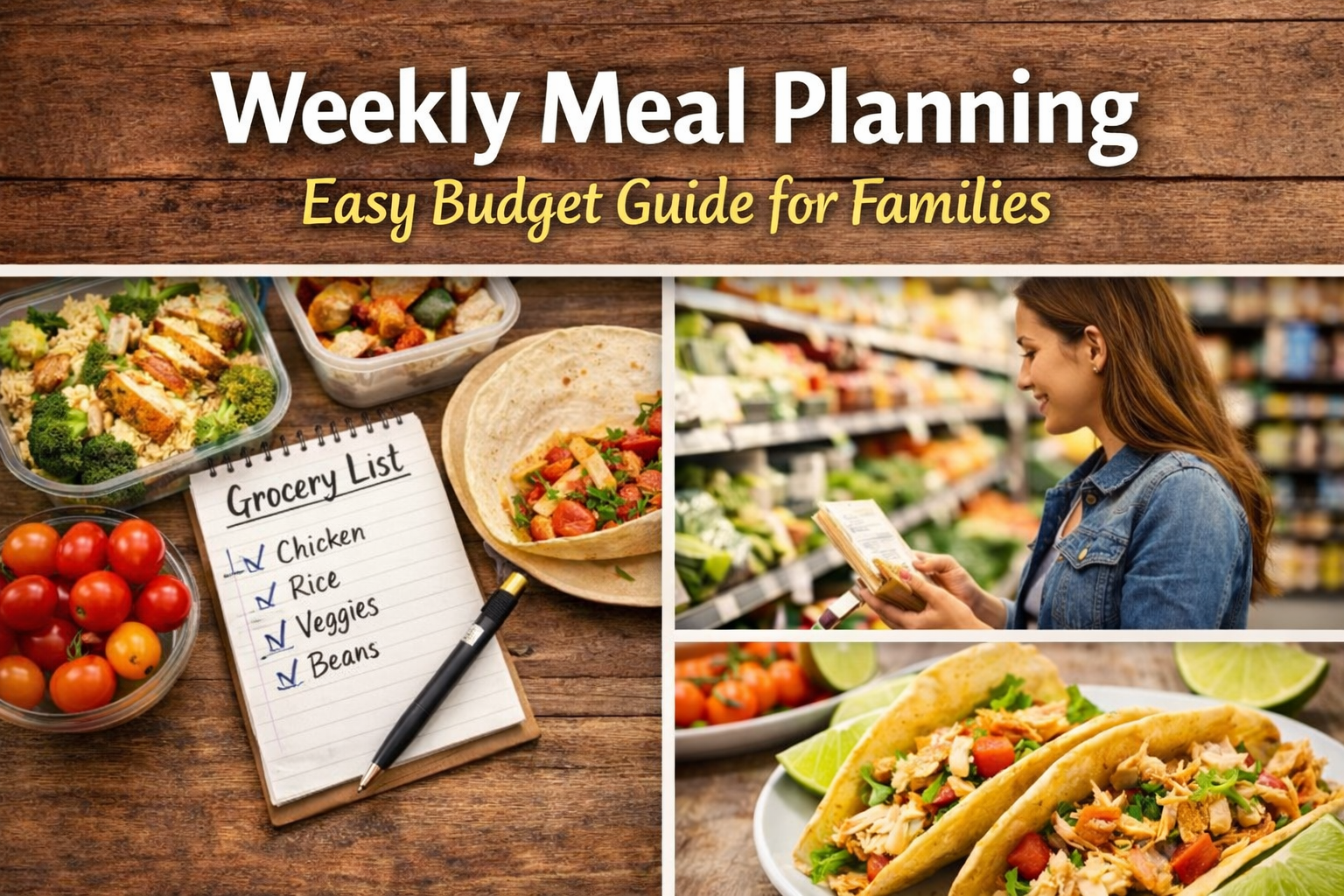
Meal planning is one of the easiest ways to save money, reduce stress, and make sure your family eats healthy meals during the week. Many families struggle with deciding what to cook every day, which often leads to last-minute takeout or expensive grocery trips.
The good news is that weekly meal planning doesn’t have to be complicated. With a simple plan and a little preparation, you can save both time and money while making delicious meals for your family.
In this guide, you will learn how to plan weekly meals for a family on a budget, even if you have never done meal planning before.
Why Weekly Meal Planning Saves Money
When you plan your meals in advance, you avoid unnecessary grocery shopping and food waste.
Here are some of the main benefits:
- You buy only the ingredients you need
- You reduce food waste
- You avoid expensive takeout meals
- You save time during busy weekdays
Many families report saving $50–$150 per month just by planning their meals ahead of time.
Step 1: Check What You Already Have
Before creating a meal plan, look inside your:
- Refrigerator
- Freezer
- Pantry
You may already have ingredients that can be used for several meals. This prevents buying duplicates and helps reduce waste.
For example:
- Frozen chicken can be used for stir fry or tacos
- Rice can be used for bowls or fried rice
- Vegetables can be used for soups or side dishes
Step 2: Choose Simple Family Meals
Choose meals that are easy to cook and that your family enjoys. Avoid complicated recipes during busy weeks.
Here are some simple meal ideas:
- Chicken and rice bowls
- Spaghetti with vegetables
- Taco night
- Baked potatoes with toppings
- Vegetable stir fry
Simple meals save time and reduce stress during the week.
Step 3: Create a Weekly Meal Plan
Write down your meals for the entire week. This helps you stay organized and avoid the daily question: “What should we cook tonight?”
Example meal plan:
Monday: Chicken stir fry
Tuesday: Spaghetti and salad
Wednesday: Taco night
Thursday: Baked potatoes with toppings
Friday: Homemade pizza
Saturday: Leftovers
Sunday: Roast chicken and vegetables
Having a plan makes grocery shopping much easier.
Step 4: Make a Smart Grocery List
Once your meals are planned, create a grocery list with only the ingredients you need.
Tips for saving money at the grocery store:
- Buy store brands
- Look for weekly sales
- Buy in bulk when possible
- Avoid shopping when hungry
A grocery list prevents impulse purchases and keeps your spending under control.
Step 5: Use Leftovers Creatively
Leftovers are a great way to save money and reduce food waste.
For example:
- Roast chicken can become chicken tacos the next day
- Extra rice can be used for fried rice
- Vegetables can be added to soups or omelets
Planning leftover meals can reduce cooking time later in the week.
Final Thoughts
Weekly meal planning is a simple habit that can make a big difference in your budget and daily routine. By planning your meals, creating a grocery list, and using leftovers creatively, you can save money while providing healthy meals for your family.
Start with a simple plan and adjust it to your family’s needs. Over time, meal planning will become easier and more natural.
With a little organization, you can enjoy stress-free dinners and better grocery savings every week.
Helpful Tools for Weekly Meal Planning
Planning meals becomes much easier when you use the right tools. These simple kitchen tools can help you stay organized, save time, and prepare meals for the week.
1. Glass Meal Prep Containers
Meal prep containers are perfect for storing leftovers and preparing meals ahead of time. They help keep food fresh and make it easy to pack lunches for work or school.
Benefits:
- Great for meal prep
- Keeps food fresh longer
- Microwave and dishwasher safe
- Helps organize your fridge
2. Weekly Meal Planner Notebook
A meal planner notebook helps you organize your weekly meals and grocery list in one place. Writing down your meals can make grocery shopping easier and prevent unnecessary purchases.
Benefits:
- Plan meals for the week
- Write grocery lists
- Stay organized
- Reduce food waste
👉 View this meal planner on Amazon
3. Magnetic Fridge Meal Planner
A magnetic meal planner sticks to your refrigerator so everyone in the family can see the weekly meal plan. This makes it easier to stay organized during busy weeks.
Benefits:
- Easy to see on the fridge
- Helps the whole family stay organized
- Simple to update every week
Meal Planning FAQ
Frequently Asked Questions (FAQ)
What is weekly meal planning?
Weekly meal planning is the process of deciding in advance what meals you will cook for the week. It helps families stay organized, save time, and reduce stress during busy days.
How does meal planning save money?
Meal planning helps you buy only the groceries you need. This reduces food waste and prevents impulse purchases at the store. Many families save money because they cook at home more often and avoid takeout.
How do beginners start meal planning?
Beginners can start by choosing simple meals for the week and creating a grocery list based on those meals. Start with 4–5 meals for the week and use leftovers for the other days.
What are the best foods for budget meal planning?
Some affordable foods for meal planning include:
- Rice
- Beans
- Pasta
- Chicken
- Eggs
- Frozen vegetables
These ingredients are inexpensive and can be used in many different meals.
How long does weekly meal planning take?
Most people spend about 20–30 minutes planning meals and creating a grocery list for the week. This small amount of time can save hours during the week.
Can meal planning help reduce food waste?
Yes. Meal planning helps you use the food you already have and plan meals around it. This prevents ingredients from going bad in the refrigerator or pantry.

Hi, I’m Monica, the creator of Nicafitness. I’m passionate about helping people stay active and healthy through simple fitness tips, quick workouts, and nutritious meal ideas. My mission is to make healthy living easy and achievable for everyone, even with a busy lifestyle.
Hi Monica, The article is well fit into this topic. However, I have some objections regarding the budget meal planning because if we consider budget meal planning what about the nutrition that should be intaken everyday because you have listed some food that can be considered for budget meal planning. If we trying budget meal planning that will have health consequences because of the inadequate nutrition intake which will definitely lead to nutrition deficiency and ultimately health issues which will result high medical costs. So, I think budget meal planning will lead to increase our expenditures in other form don’t you think so?
Thank you for your comment! You make a good point. Budget meal planning doesn’t mean sacrificing nutrition. The goal is to choose affordable foods that are still healthy, like beans, eggs, rice, and vegetables, so families can eat well while staying within their budget.
This is a really practical guide. One thing I’ve noticed in my own house is that the biggest savings don’t come just from the grocery list; they come from removing the daily decision of “what are we eating tonight?” When that question isn’t already answered, that’s when takeout suddenly becomes the easiest option.
We started doing something similar with a simple weekly rotation of meals like tacos, pasta, stir fry, and roasted chicken. It’s nothing fancy, but having a plan makes the week run much smoother, and the grocery bill is definitely more predictable.
I also like the point about checking the freezer and pantry first. It’s amazing how many meals you can make from what’s already in the house if you plan around it. Simple systems like this really do make a big difference for busy families.
Thanks for sharing that, Jason! I really like your point about removing the daily question, “What are we eating tonight?” That alone can make a big difference for families trying to stick to a budget
Do you usually stick with the same rotation every week, or do you switch things up depending on what’s on sale at the grocery store?